

Contract Assembly Explained for Automated Drafting
 Jørgen Højlund Wibe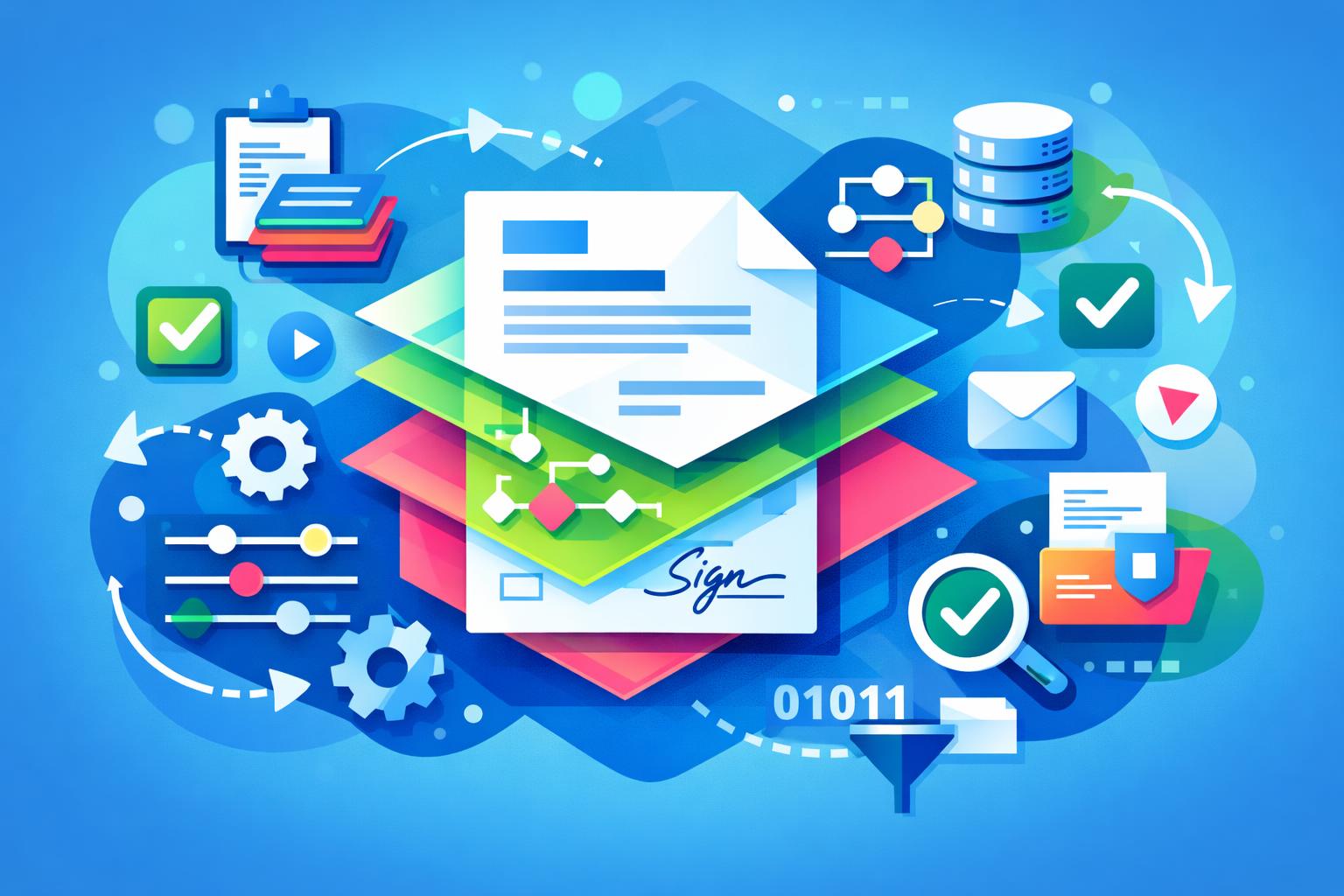
“Contract assembly” can sound like jargon until you watch it produce a complete first draft in minutes. Instead of starting from a blank document or copying last year’s agreement, you answer a structured set of questions and the system assembles a draft using your approved building blocks.
This post explains what contract assembly actually is, how it differs from simple document automation, and what has to be in place for it to work reliably at scale. You’ll also see how intake inputs connect to templates, clause libraries, and conditional logic so the draft reaches legal review already aligned with your organization’s preferred positions and policies.
Contract assembly: from intake inputs to a complete first draft
At its core, contract assembly generates a full first draft automatically. The structure comes from a predefined template, the legal language is pulled from an approved clause library, and rules determine which sections appear based on deal details captured during intake. By the time the document reaches legal review, it already reflects internal standards rather than a requester’s best guess.
This matters most when your team handles high volumes of similar agreements across legal, procurement, and commercial functions. Instead of treating drafting as a one-off writing task, you shift it into a controlled, repeatable process where “how you contract” is encoded into the workflow. The result is faster drafting, more consistent outcomes, and better risk alignment across the business.
“Contract assembly turns drafting into a repeatable system: templates set the structure, clauses provide approved language, and conditional rules decide what belongs in the draft.”
If you’re looking for a practical example, consider how conditional rules can change the contract based on real deal facts. A higher contract value can trigger a different liability clause, while a specific jurisdiction can insert additional regulatory language. The logic runs automatically, so the person requesting the contract doesn’t need to understand the legal rationale behind each drafting decision.
What makes contract assembly different from basic document automation
Traditional document automation often stops at filling in blanks, including names, dates, prices, and signatures. That approach is useful, but it doesn’t meaningfully change drafting quality or risk control because the underlying language stays fixed. In contrast, contract assembly actively decides what language belongs in the document and whether entire sections should appear at all.
The difference becomes obvious in legal review. A filled-in shell document typically needs heavy editing because the draft doesn’t reflect your playbook. An assembled contract starts much closer to an acceptable negotiating position, so legal can focus on true exceptions rather than routine cleanup and formatting.
Pro Tip: Treat intake as a legal design exercise. The quality of your first draft depends on capturing the variables that actually change risk, such as contract value, jurisdiction, renewal terms, and whether personal data is involved.
Under the hood, effective assembly relies on three building blocks working as one system. Templates provide the backbone and can be version-controlled so updates roll out consistently. Clause libraries supply approved provisions and variants, which is where ClearContract’s contract assembly approach fits naturally into governed drafting. Conditional logic links intake answers to drafting decisions, so the tool enforces your standards even when the requester isn’t a lawyer.
How the workflow runs in practice (and why the value goes beyond speed)
In day-to-day use, contract assembly usually begins with structured intake rather than a Word document. A requester completes a questionnaire that captures the commercial and legal variables that matter, such as contract type, deal value, jurisdiction, and renewal terms. Once captured, the assembly engine maps answers to template variables and rule sets, pulling boilerplate and inserting the right clause variants automatically.
Governance shows up when certain answers trigger escalation. For instance, a deviation from standard payment terms can require additional review before the contract moves forward, which is easier to manage when drafting and approvals are connected through configurable contract workflows. The practical outcome is a draft your legal team recognizes as “their language,” even though they didn’t manually write it.
Additionally, the strategic upside is consistency and risk reduction, not just turnaround time. When everyone drafts from the same approved assets, contracts behave more predictably across departments and regions, which improves downstream reporting and oversight in a centralized contract management system. Over time, this reduces routine legal workload and helps your team scale support without scaling headcount.
- Faster contract creation with fewer manual drafting steps
- More consistent language across teams and contract types
- Lower legal risk through enforced use of approved clauses
- Reduced review effort by starting from a stronger first draft
Key Takeaways
Contract assembly is about embedding legal knowledge directly into drafting so contracts are created correctly from the start. When templates, clause libraries, and conditional logic work together, you get first drafts that are faster to produce, more consistent across the business, and safer because they steer users toward approved positions. If your team still relies on copy-paste drafting or basic form filling, the next step is seeing an end-to-end workflow in action—either by booking a demo or testing automated assembly using your own templates and clauses.
Related Reading
Explore contract workflows to see how drafting, review, and approvals connect into one continuous process.
