

Contract Intake Process: A Practical Workflow for Business Teams
 Jørgen Højlund Wibe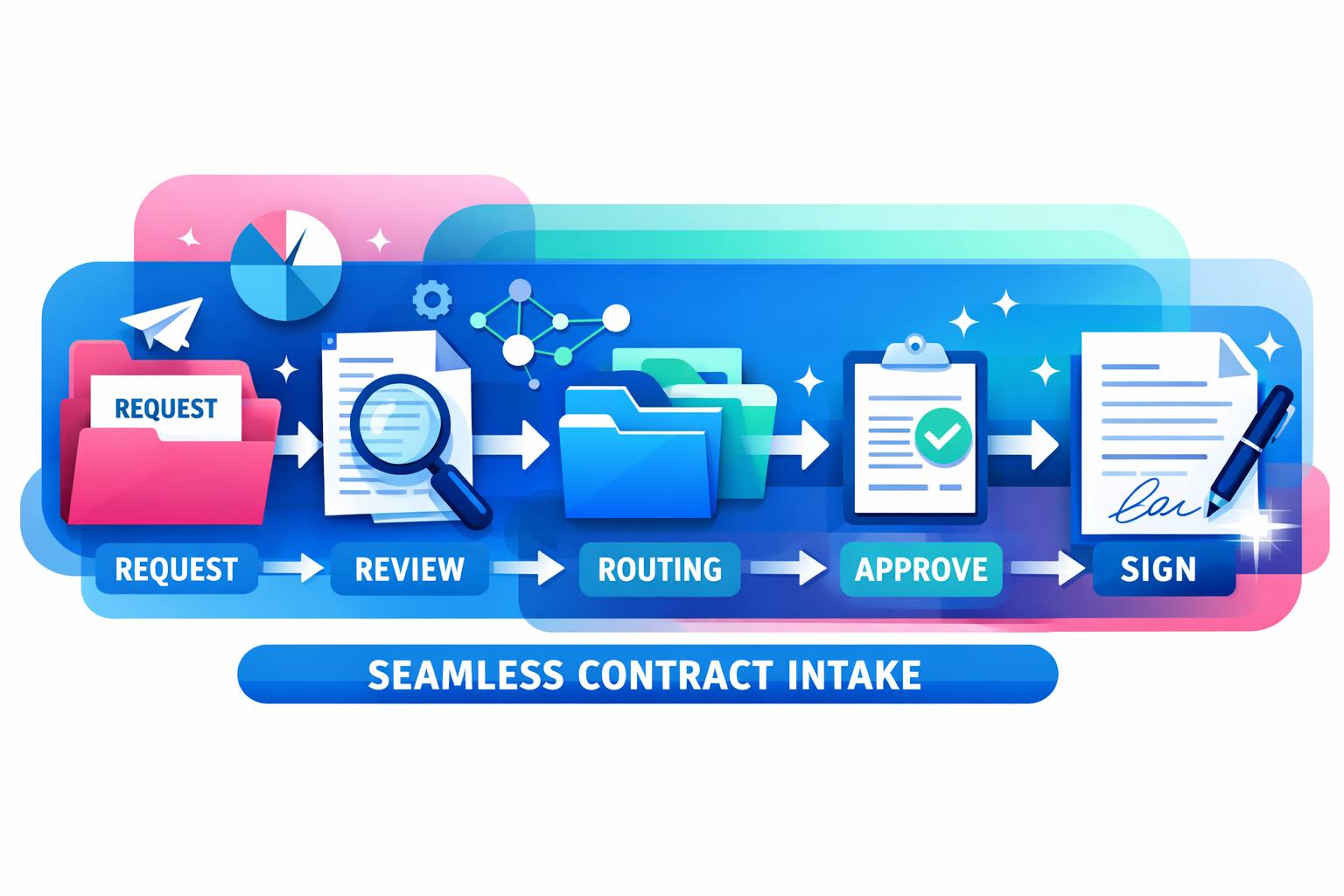
Contract work often slows down before anyone starts reviewing the document. A request arrives with an unclear deadline, incomplete commercial context or no agreed owner. A practical intake process gives Legal, Procurement, Finance and commercial teams a shared starting point: what is being requested, what decision is needed, who owns the next step and what information must be available before work begins.
This guide offers general operational guidance, not legal advice. It focuses on making incoming contract requests easier to understand, prioritise and hand over.
What a contract intake process should achieve
Intake is the point at which a business need becomes a workable request. It should not be a long questionnaire for its own sake. The aim is to collect enough context to decide the next action without asking the requester to predict every legal or commercial issue.
- Make the request and its business purpose clear.
- Identify the requester, business owner and proposed counterparty.
- Capture the requested decision date and the reason for it.
- Record the relevant draft, prior agreement or supporting documents.
- Give the receiving team a consistent basis for deciding what happens next.
Start with a minimum request record
Different agreement types need different details, but most teams benefit from a small common record. Include the contract type, a short description of the transaction, the counterparty, the business owner, the expected timing, the source document and the question the team needs answered. Add fields only when they change the work required or the people who should contribute.
For example, an incoming supplier draft may need the current version, the commercial scope and the intended start date. A request to amend an existing agreement should also point to the governing signed version and describe the proposed change. Keeping the record tied to source documents helps prevent a team from reviewing the wrong version or working from an incomplete request.
Use a proportionate triage conversation
Triage is a decision about the next step, not a promise about outcome or turnaround time. A simple discussion can separate requests that are ready for review from those that need missing context, a business decision or a clearer owner first.
Useful questions include:
- What business event makes this request necessary now?
- Is there a fixed external date, or an internal preference?
- What is the requested contract action: draft, review, renewal, amendment, approval or information?
- Is there an existing agreement or prior negotiation record that must be considered?
- Which functions need to provide input before a decision can be made?
These questions improve the quality of the handoff without turning intake into a legal assessment. If a request raises a question outside the receiving team’s authority, record that clearly and involve the appropriate decision maker. Where a request departs from a usual position, capture the business context and the decision needed in a contract exception record so the handoff does not lose the rationale.
Define clear handoffs and owners
A request can move through several hands without anyone being accountable for the whole outcome. Avoid that by naming a business owner for the request and making the next handoff explicit. The business owner supplies context and confirms the commercial objective; reviewers contribute within their remit; the relevant approver makes the decision when approval is required.
A short responsibility matrix is often enough. For guidance on making these roles explicit, see a practical contract governance framework and a contract approval process for business teams.
Keep the record useful after the first request
Intake should create a reliable starting record, not a one-time email trail. When the request progresses, keep the governing document, important assumptions, owners and decision history together. That makes later review, renewal, amendment and handover conversations easier to prepare.
For the review stage, use a focused checklist rather than relying on memory. Our guide to key elements of contract review explains how teams can organise a practical review discussion. For work that continues after signature, contract obligation tracking workflows can help frame the operational follow-through.
Common intake mistakes to avoid
- One catch-all form: it asks every requester for details that may not be relevant.
- An unexplained deadline: it makes prioritisation difficult and can hide a missing business decision.
- No source document: it increases the chance of reviewing an outdated or incomplete version.
- Unclear ownership: it leaves reviewers chasing commercial context.
- No decision record: it makes it hard to understand why a request was accepted, deferred or escalated.
A practical first step
Choose one high-volume request type and map the current path from request to first decision. Identify the minimum information that is repeatedly missing, decide who owns the business context and agree how the team will record the next step. Test the approach with real requests, then refine it before applying it more broadly.
ClearContract supports organisations in receiving, reviewing, filing, monitoring and managing contracts under customer-defined rules, while people retain decision and approval authority. Book a demo to discuss your contract-management process.