AI Contract Review for Key Boilerplate Clauses
 Jørgen Højlund Wibe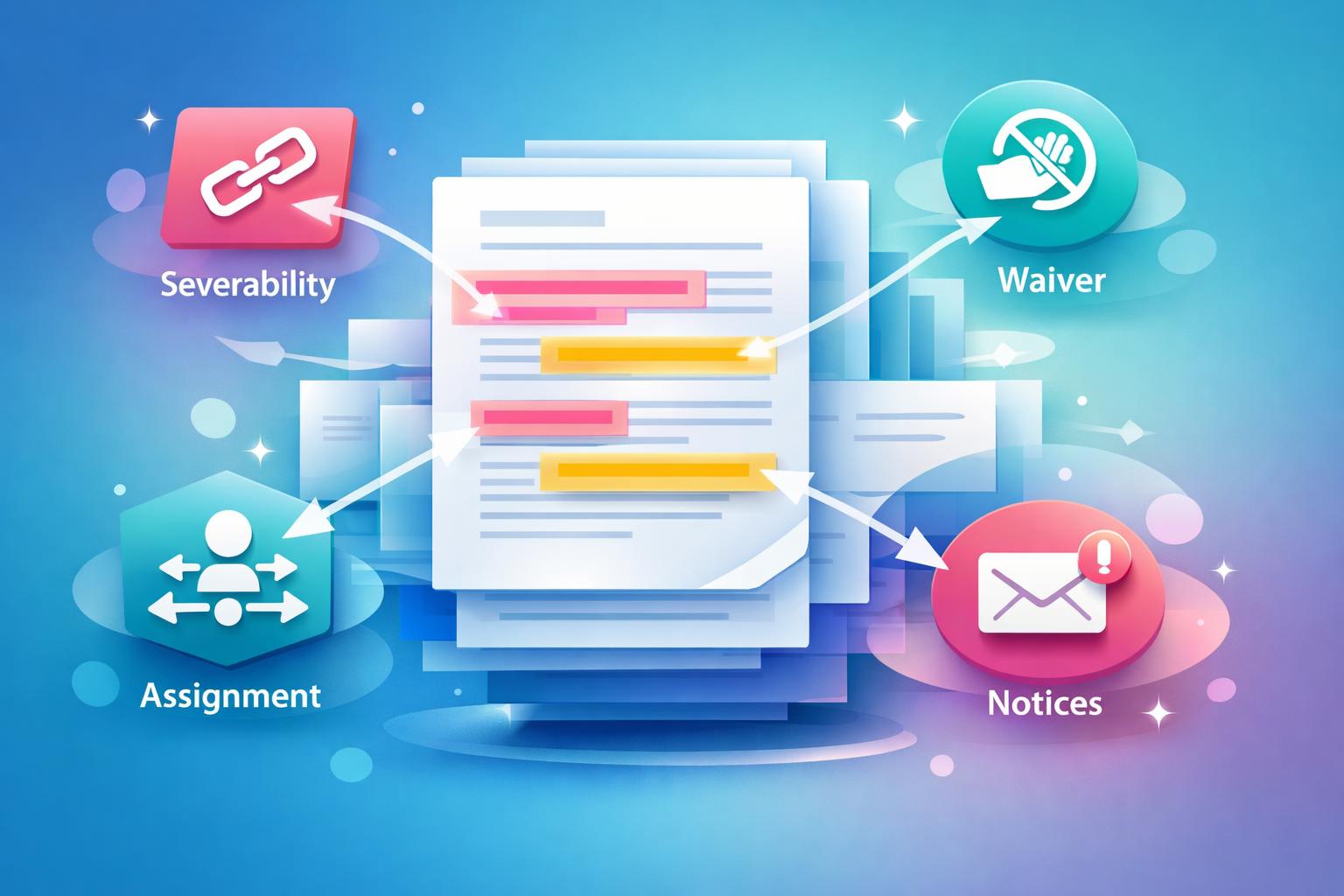
boilerplate clauses sit quietly at the back of most commercial agreements, but they often decide what actually happens when the relationship gets strained. Because they look familiar, you may skim them, copy them forward, or accept them as “standard”—and accidentally shift risk in the process. This post explains why **boilerplate clauses** are anything but harmless, and why they deserve deal-specific attention.
You’ll see how four provisions—severability, waiver, assignment, and notices—shape enforceability, timing, leverage, and even exit value. We’ll also connect the dots on why consistent drafting matters at scale, and how a structured approach to contract work can prevent “routine” language from becoming a recurring source of disputes.
Why “standard” boilerplate changes real outcomes
Boilerplate is often treated as neutral, but it actively allocates risk and sets the rules of engagement when something goes wrong. Courts regularly spend as much time on back-end clauses as on headline pricing or scope, because boilerplate decides who can enforce rights, when deadlines start, and whether the rest of the deal survives a defect. That’s why a clause that “looks normal” can still be commercially aggressive.
Take severability: one version merely removes an invalid provision, while another invites a court to trim or rewrite it into an enforceable shape. Those two approaches can land you in very different positions in contracts involving non-competes, exclusivity, or regulatory constraints. Additionally, waiver, assignment, and notice mechanics can quietly decide whether you retain leverage—or lose it through everyday operational habits.
“Boilerplate clauses are operational, not ornamental—they decide how rights are enforced, transferred, and preserved when things go wrong.”
The challenge compounds when you manage contracts at scale. If teams reuse templates across dozens or hundreds of agreements, small drafting choices become systemic risk. A structured approach to contract management helps you keep “standard” language consistent, current, and aligned with your actual risk position rather than a patchwork of legacy edits.
Four clauses that quietly run the contract
Severability answers a simple question—what happens if part of the agreement is invalid—but the consequences can be complex. If the clause allows judicial modification, you may save the deal, but you also hand a court power to reshape the bargain in ways neither side expected. In contrast, some parties make certain provisions non-severable so the agreement forces renegotiation if the legal balance breaks, which can be crucial in tightly regulated or high-stakes arrangements.
Waiver provisions are about behavior over time, not just what’s written on paper. Most say that delay or failure to enforce doesn’t waive rights, and that any waiver must be explicit and in writing. However, if your day-to-day operations routinely tolerate late performance without formal escalation, a counterparty may still argue implied waiver—especially if your waiver language doesn’t align with notice and cure mechanics. This is where disciplined review matters, and why teams increasingly use AI-powered contract review to spot internal inconsistencies before signature.
Pro Tip: Stress-test waiver wording against how your team actually behaves. If enforcement is informal in practice, make sure notice and cure procedures don’t rely on formality you’ll never use.
Assignment clauses decide whether the contract can be transferred to an affiliate, buyer, or financier, and whether a merger or change of control triggers consent rights. Customers often care about control over who they’re doing business with, while suppliers and investors care about preserving deal value on exit. The hard part is change of control: whether a transaction counts as assignment “by operation of law” can vary by wording and jurisdiction, so vague language can create expensive arguments at exactly the wrong moment.
Notices clauses look procedural, yet they commonly decide whether termination, cure periods, consents, or amendments are effective at all. If notice is only valid when sent to a specific address by a specific method, an email to a familiar contact may legally count for nothing, and the dispute becomes about timing rather than substance. Conversely, allowing informal messages to qualify as notice can trigger consequences earlier than intended, so the clause should match real communication patterns and be easy to keep current over a long-term deal.
Making boilerplate scalable with consistent drafting
These clauses don’t operate in isolation; they function as a system. Severability affects how aggressively you draft substantive obligations, waiver interacts with notices and cure periods, assignment connects to confidentiality and regulatory compliance, and notices underpin enforcement across the contract. When language is copied forward without review, the interactions become unpredictable and hard to police across a growing contract portfolio.
This is where automation and centralized templates can reduce risk without slowing deals. With automated contract drafting, you can reuse approved clause language while still tailoring it to the transaction, instead of relying on “standard” text that may reflect outdated governing law or historic negotiating positions. Platforms like ClearContract help teams keep templates consistent, track approved clause language, and flag deviations during review before they become costly disputes.
When boilerplate is reused across many agreements, small drafting choices scale into systemic risk.
Key Takeaways
- Boilerplate clauses are operational tools that determine enforceability, timing, and leverage when the relationship is under pressure.
- Severability choices allocate drafting risk, especially where a court might trim or rewrite an over-broad provision.
- Waiver language only protects you if it matches real-world behavior and fits with notice and cure mechanics.
- Assignment terms affect control and exit value, and vague change-of-control drafting can create deal-time disputes.
- Notices provisions decide whether terminations, cure periods, and amendments are valid—so they must reflect how people actually communicate.
Next step: if you manage many commercial agreements, treat boilerplate as a centralized asset rather than a per-contract afterthought. Standardize your templates, make deviations visible, and use consistent review workflows so “routine” clauses don’t quietly accumulate risk over time. If you want to see how ClearContract supports that approach across drafting, review, and ongoing contract management, explore the platform or book a short demo to walk through a real example.
Related Reading
Check out contract management for more insights on building scalable processes for templates, clause control, and contract performance.