
Pre-Signature vs Post-Signature Contract Management
 Jørgen Højlund Wibe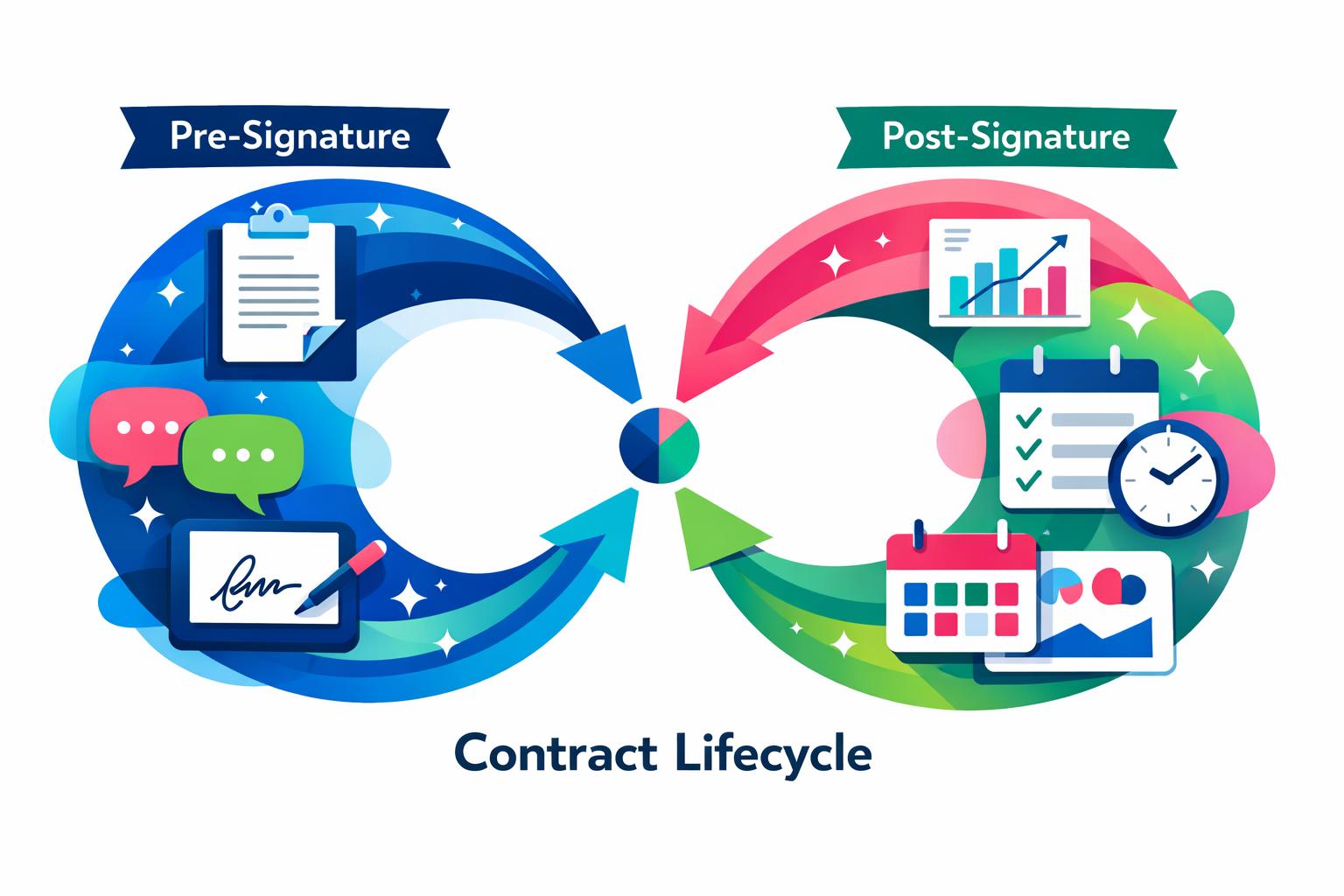
Most teams treat contracting like a sprint: intake, redlines, approvals, signature—done. However, pre‑signature vs post‑signature management isn’t a choice between two priorities; it’s one lifecycle with two equally important halves. The difference is that the second half is where value is actually realized—and where it most often quietly leaks.
This post explains how pre‑signature work differs from post‑signature execution, why post‑signature deserves equal attention, and what it takes to run contracts like operational assets rather than archived PDFs. You’ll see how obligation tracking, performance monitoring, and renewal planning work together to turn negotiated terms into measurable outcomes.
Pre‑signature vs post‑signature management across the contract lifecycle
Pre‑signature management includes everything required to get to “yes,” including intake, drafting, negotiation, approvals, and execution. The focus is on risk allocation, compliance, and commercial positioning, and the central question is whether you’re signing the right deal under acceptable terms. Legal often leads, supported by sales, procurement, or finance depending on the agreement.
Post‑signature management starts the moment the contract is executed, when the words on the page must translate into real-world delivery. Your teams need to track deliverables, validate payments, measure service levels, and respect notice periods before rights expire. Ownership expands beyond legal to business owners, operations, vendor management, and finance, because the core question becomes whether you’re getting what you negotiated for—and meeting your own commitments.
Many organizations unintentionally over-invest in pre‑signature work because it’s visible and familiar: redlines feel tangible, and signatures feel final. In contrast, post‑signature activities often live in inboxes, spreadsheets, and shared drives, which makes them easy to ignore until something breaks. In practice, most value leakage doesn’t come from bad drafting; it comes from unmanaged execution.
“Most value leakage doesn’t come from bad drafting; it comes from unmanaged execution.”
This is also where technology gaps become obvious. Traditional CLM tools often emphasize authoring and approvals but struggle once a signed PDF lands in a folder. Modern platforms, including a centralized contract management system, are built to carry contracts forward after signature by extracting data, assigning ownership, and keeping obligations visible to the people executing the work.
Why post‑signature contract management is where value is won (or lost)
The strongest case for post‑signature investment is straightforward: this is where value is realized or lost. Research across industries consistently shows organizations lose close to ten percent of annual contract value due to poor post‑signature practices, driven less by missing indemnities and more by missed price adjustments, unclaimed SLA credits, unnoticed under‑performance, and renewals that roll over by default.
Organizations lose close to 10% of annual contract value when post‑signature execution isn’t actively managed.
Additionally, post‑signature risk is operational, not theoretical. After signature, contracts start driving day-to-day behavior, including how vendors handle data, how quickly services respond, how pricing changes over time, and when termination rights can be exercised. If nobody actively manages those mechanics, your organization absorbs the risk whether it notices it or not.
Manual approaches don’t scale in this phase. When signed agreements are stored without structure, you can’t easily answer basic questions like who owes what, what’s due next month, or which version is current after amendments. Over time, the contract becomes disconnected from operations even though it remains legally binding, which is exactly how value leakage becomes “normal.”
The three pillars of effective post‑signature contract management
Post‑signature work can feel sprawling because it touches many teams, but it becomes manageable when you organize it around three connected pillars: obligation tracking, performance monitoring, and renewal planning. When you treat these as a system instead of separate tasks, contracts stop being static documents and start functioning as operational tools that guide day-to-day decisions.
First, obligation tracking turns contract language into actionable commitments, including delivery milestones, payment terms, notice requirements, compliance duties, and reporting obligations. The recurring failure isn’t unclear drafting; it’s invisibility in daily work. Effective tracking means extracting obligations into structured data, assigning owners, and monitoring status, so you don’t miss notice windows, breach your own duties, or forfeit entitlements that require timely action.
AI increasingly supports this transition by reducing reliance on manual review. Tools that automate data extraction can identify key obligations and dates directly from signed agreements, which is exactly what platforms like ClearContract’s AI contract review tools are designed to enable: moving from static PDFs to structured obligations your teams can actually manage.
Second, performance monitoring connects contractual promises to real outcomes. Many agreements include service levels, KPIs, volume commitments, or pricing mechanisms that only make sense when you compare them with operational data. Without consistent monitoring, under‑performance goes unchallenged, and you keep paying “as if” the contract is being met even when reality says otherwise.
This visibility isn’t just about enforcement; it improves decisions. Documented performance history strengthens renegotiation positions, supports termination decisions when needed, and helps you identify which vendors or customers actually deliver value. It also creates an audit trail, which matters more as regulatory scrutiny grows and cross-functional accountability becomes non-negotiable.
Third, renewal planning prevents the most avoidable losses. Contracts rarely end cleanly; they auto‑renew, roll into new terms, or require advance notice to terminate or renegotiate. If renewal management is weak, you lose leverage, miss consolidation opportunities, and get trapped in unwanted extensions simply because deadlines were buried in someone’s calendar.
For renewal planning to work, reporting and workflows must surface end dates and notice windows early, then route the decision to the right stakeholders. That’s where tools like workflow automation and contract reporting features help teams coordinate action across legal, finance, and business owners—months before a deadline, not days after it passes.
Pro Tip: Treat obligations, performance, and renewals as one connected workflow. If you track renewal dates without performance data, you renew blindly; if you monitor performance without notice tracking, you lose the ability to act.
Key Takeaways
- Pre‑signature work defines what the deal promises, but post‑signature management determines whether those promises are fulfilled.
- Most value leakage happens after signature due to missed obligations, unmanaged performance, and poorly planned renewals, including unwanted auto‑renewals.
- Obligation tracking, performance monitoring, and renewal planning are interdependent; weaknesses in one area quickly undermine the others.
- Centralized contract data, clear ownership, and automated alerts help turn contracts into operational assets rather than archived documents.
- If templates and approvals are already strong, the fastest ROI often comes from strengthening what happens after signature.
Next steps are practical: map your top contract types, identify the handful of obligations and dates that drive the most risk or revenue, and make ownership explicit. If you want to modernize the full lifecycle, exploring an AI-driven platform that supports end-to-end execution—and booking a demo with ClearContract to see post‑signature workflows in practice—can help you close the gap between negotiated value and realized value.
Related Reading
Check out ClearContract’s centralized contract management system for a closer look at how structured data, ownership, and automation support post‑signature execution.