

Financial Reporting From Contracts With CLM and ERP
Jørgen Højlund WibePublished July 8, 20264 min read
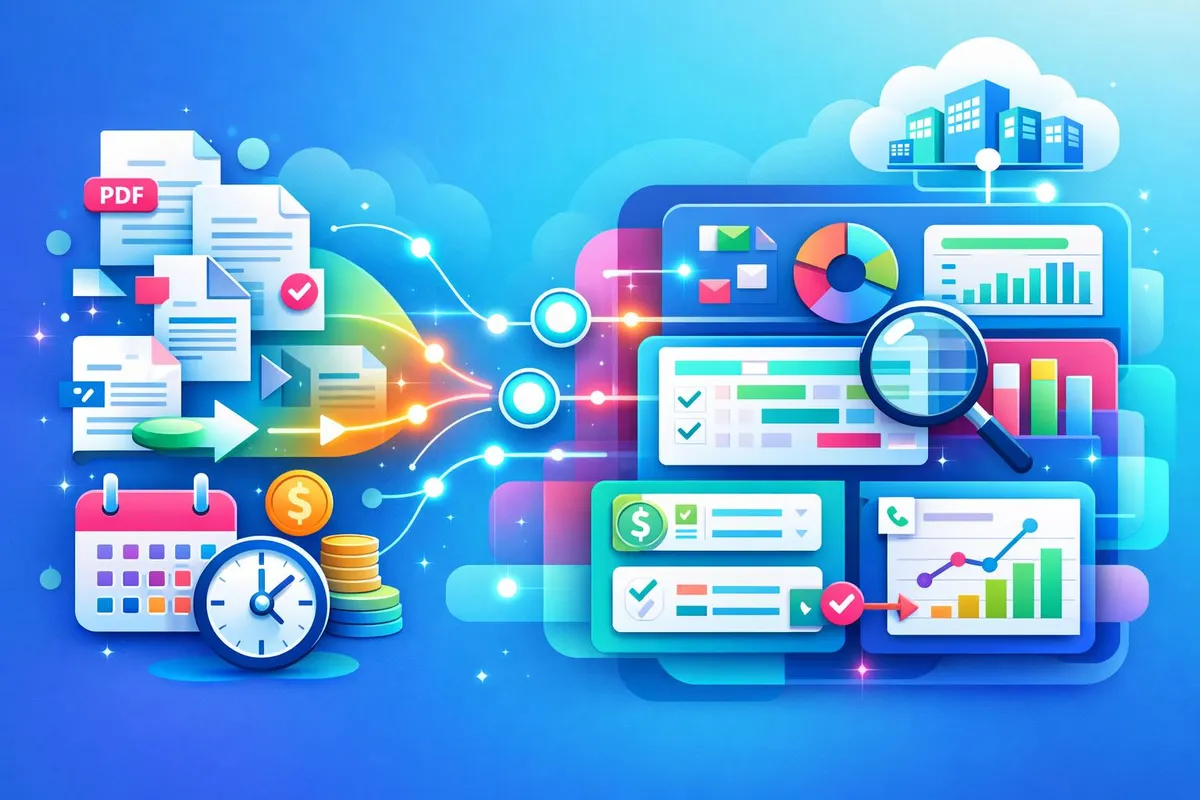
Forecasts fall apart when your most important financial inputs are trapped inside PDFs. In many organizations, contracts live in legal repositories, obligations get retyped into spreadsheets, and ERP records drift out of sync—creating delayed reporting, inconsistent numbers, and time-consuming reconciliation.
This post explains how financial reporting from contracts works when you use modern contract lifecycle management (CLM) software, what financial data matters most, and why integrating CLM with ERP platforms improves forecasting and financial control. You’ll also see practical examples—like renewals, staged payments, and volume discounts—and how AI turns contract language into structured, reportable data that finance teams can trust.
How financial reporting from contracts works in practice
Every agreement carries terms that shape performance well beyond the legal team—pricing, duration, payment dates, renewal clauses, and obligations that affect both revenue and spend. The problem is that, in many companies, those terms remain unstructured inside Word files or PDFs, so finance only sees them after someone manually re-enters them.
CLM platforms change that by treating agreements as a source of operational data. When a contract is drafted, uploaded, or signed, AI extraction identifies key fields—such as transaction values, currencies, contract duration, payment schedules, renewal timelines, milestones, and performance obligations—so finance can search and report on standardized metadata instead of reading documents line by line.
“When contracts become structured data, forecasting stops being a reconciliation exercise and starts reflecting real commitments.”
This becomes especially valuable at scale. For example, a multi-year supplier contract with volume discounts and staged payments can create mismatches if procurement, finance, and operations track terms separately. With CLM, those commercial terms are captured once from the executed agreement and made consistently available for reporting and planning.
Platforms like ClearContract support this approach by combining centralized storage with extraction and structure. Using its contract management capabilities, you can keep agreements organized while surfacing the financial metadata you actually need for forecasting and reporting.
Additionally, structured extraction improves auditability. When reporting data is traceable back to signed agreements, you reduce the risk of inconsistent entries across teams and gain clearer evidence of where numbers originated—especially important under complex compliance requirements and revenue recognition standards.
Why ERP integration improves forecasting and financial control
The biggest leap happens when your CLM connects directly to your ERP. Without integration, contract data goes stale immediately after signing because teams export fields manually, update spreadsheets inconsistently, or duplicate entries across systems. Forecasting then depends on delayed updates and assumptions instead of active contractual obligations.
With API-driven integration, extracted terms can flow into ERP systems like SAP, Oracle, NetSuite, Workday, or Sage Intacct to support billing workflows, invoice matching, revenue recognition support, forecasting models, and cash flow planning. In practice, that means executed agreements can populate records, trigger approvals, and update budget forecasts as soon as the contract is finalized.
Renewals are a common forecasting blind spot. If you can’t easily see which contracts are approaching expiration or auto-renewal windows, your forward view of retention and cost exposure weakens. A centralized CLM can flag renewal timelines and pricing changes early, so you can model upcoming revenue or liabilities with greater precision.
Integration also strengthens invoice validation. When billing terms in the ERP don’t match the underlying contract, discrepancies surface sooner, reducing overpayments, missed discounts, and reconciliation delays. ClearContract’s workflow automation tools are built for this cross-system coordination, so a signed agreement can automatically trigger downstream approvals, reporting updates, or synchronization steps.
Finally, reporting becomes more flexible when contracts are structured. Instead of static repositories, CLM platforms let you analyze commitments by business unit, supplier, cost center, contract value, renewal timeline, or obligation type—so dashboards update as agreements change. ClearContract’s AI contract review tools, paired with its reporting and analytics features, support faster review while capturing commercially relevant terms for forecasting and financial control.
- Revenue forecasting tied to committed contract value and renewal timing
- Cash flow planning based on payment schedules and milestone obligations
- Budget tracking across departments, vendors, and subsidiaries
- Supplier spend analysis using contract-linked procurement data
- Revenue recognition support for performance obligations and transaction terms
Key Takeaways
If your forecasts rely on spreadsheets and delayed updates, your biggest risk may be invisible contractual commitments. Modern CLM platforms turn agreements into operational inputs by extracting structured financial terms, improving traceability, and feeding data into ERP workflows where forecasting and control actually happen.
Focus on a few practical outcomes: use contracts as a consistent source of truth for revenue and spend, reduce reconciliation work through integration, improve renewal visibility, and strengthen auditability by tying reporting back to executed agreements. If you want to improve financial reporting from contracts, explore AI-powered CLM platforms via a personalized demo.