Contract Intelligence for Faster AI Contract Review
 Jørgen Højlund Wibe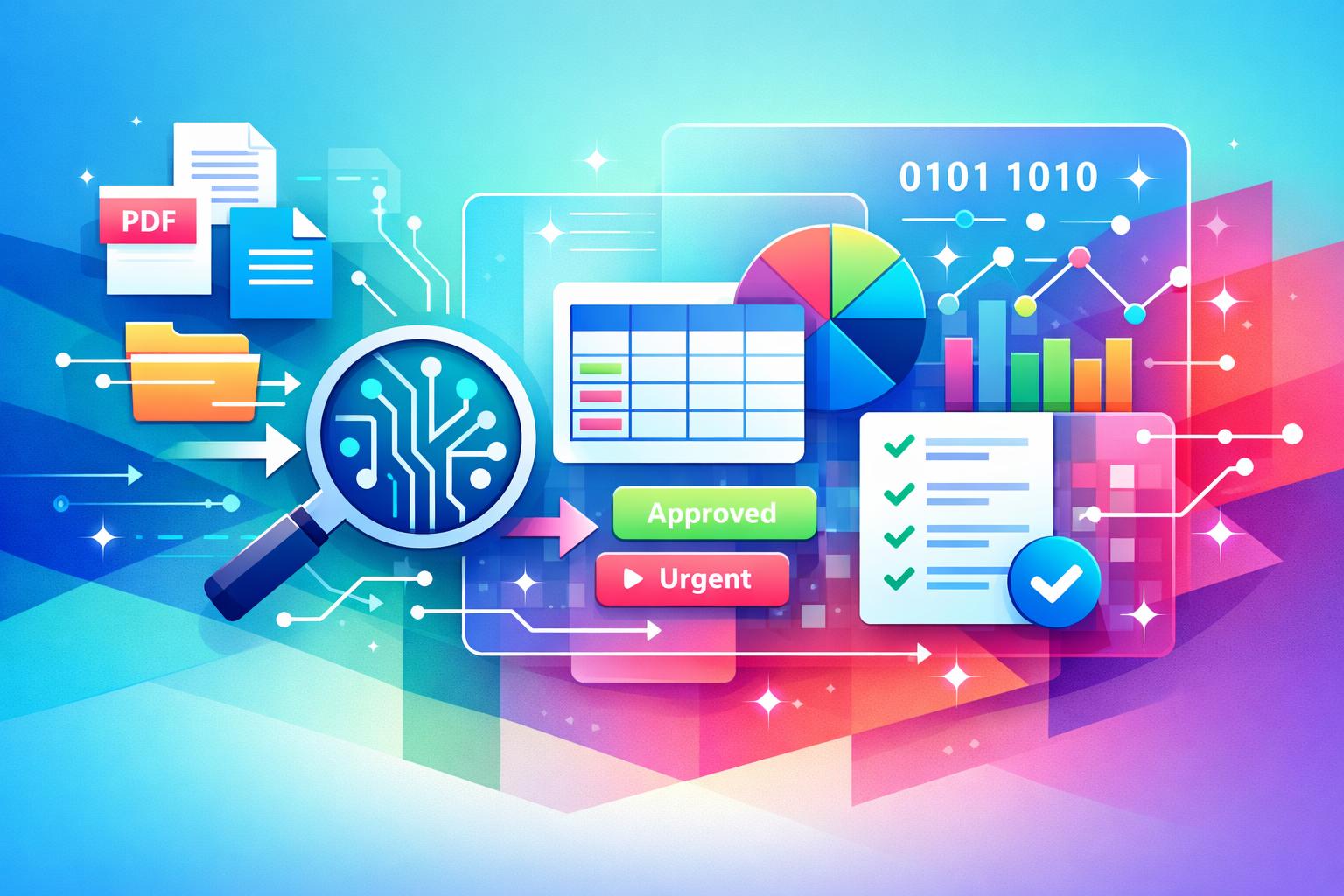
Most organizations already have the information they need to manage risk, improve cash flow, and negotiate better—yet it’s trapped inside PDFs, Word files, and scans. Contract intelligence turns those documents into usable business data by applying AI to read agreements, extract structured fields, and analyze terms across an entire portfolio. In this post, you’ll learn what contract intelligence means in practice, how AI converts messy contract text into normalized data, and what that enables for analytics, benchmarking, and risk identification. You’ll also see why integration matters—when extracted data powers workflows and reporting, insight becomes action.
What contract intelligence means when you’re managing contracts at scale
Contract intelligence is the shift from treating contracts as static legal records to treating them as a portfolio of structured, searchable attributes. Instead of reading agreements one by one, AI identifies the information you care about and turns it into fields, clause tags, obligations, and risk signals that your systems can query.
That difference shows up in everyday work. Dates become real dates rather than text buried in paragraphs, liability caps become numbers you can compare, and renewal mechanics become reportable flags. Additionally, you can spot deviations even when language varies, because AI can recognize meaning and context rather than relying on simple keyword matches.
Most capabilities live inside or alongside CLM tools, but the “intelligence” is about depth and consistency. The practical goal isn’t automation for its own sake—it’s visibility and decision support. If you’re building this capability into your own stack, start by aligning extraction targets with how you run contract intelligence programs across legal, procurement, finance, and compliance.
“A contract stops being ‘just a document’ and becomes data you can search, compare, and measure across your entire portfolio.”
How AI turns unstructured contracts into structured business data
AI-powered contract intelligence usually starts by making documents readable. Many archives contain scanned agreements or image-based PDFs, so OCR converts them into text that models can interpret. Without this step, large portions of legacy contract repositories remain effectively invisible to analytics.
Once text is accessible, NLP models trained on legal language extract entities and interpret clauses in context. That includes parties, dates, amounts, and jurisdictions, along with clause types such as termination, limitation of liability, confidentiality, and governing law—even when headings and drafting styles differ widely.
Machine learning adds consistency over time by learning patterns that separate “standard” from “non-standard” positions, including when a liability cap suggests unusually high exposure or a renewal provision creates operational risk. Some platforms blend large language models with targeted extraction and rules to balance flexibility with accuracy, especially when your templates vary across business units.
Pro Tip: Treat extracted fields as operational inputs, not a one-off data export. The biggest gains come when the same data drives review queues, deadline alerts, and reporting inside your contract workflows.
In platforms like ClearContract, extraction happens inside the contract management environment, where teams can validate results as needed. Because the data connects directly to contract management and AI-powered contract review, you’re not left with a spreadsheet that goes stale—the extracted terms can drive the next step in the process.
What gets extracted goes well beyond basic metadata. Alongside parties, effective dates, expiration dates, and governing law, many teams target pricing models, currencies, payment schedules, and discounts. Clause-level extraction can identify termination rights, notice periods, indemnities, service levels, and data protection commitments so you can apply consistent governance across your portfolio.
Turning extracted terms into analytics, benchmarking, and risk identification
Structured data matters because it lets you ask portfolio-level questions that manual review can’t support. For instance, you can filter for agreements with unlimited liability, identify contracts governed by unfamiliar jurisdictions, or generate a view of every contract expiring in the next 90 days—including which ones auto-renew and which require notice.
Analytics become reliable when terms are normalized. When payment terms are captured consistently, finance can analyze average payment periods and spot outliers that impact cash flow. When termination and renewal clauses are categorized, legal can see where negotiation standards drift and which counterparties regularly push for unfavorable notice periods.
When terms are standardized, you can measure “normal” in your portfolio—and instantly spot what deviates.
Benchmarking naturally follows. By comparing extracted terms across vendors, customers, regions, or business units, you can see what your organization typically accepts and use that baseline in negotiations. A contract with a higher-than-usual liability cap or unusual renewal mechanics stands out immediately, not after it becomes a problem.
Risk identification benefits most from the portfolio perspective because patterns reveal concentrations of exposure. Additionally, when insights live inside the contract platform, they can trigger action through alerts, routing, and dashboards. ClearContract’s reporting and workflow automation is designed to convert extracted contract data into operational next steps, not just visualizations.
Key Takeaways
- Contract intelligence applies AI to read agreements and analyze them across entire portfolios—not one document at a time.
- AI pipelines combining
OCR,NLP, and machine learning convert unstructured legal text into structured, queryable fields. - Once data is normalized, you unlock portfolio analytics, internal benchmarking, and faster identification of unusual terms and concentrations of risk.
- The biggest value comes from integration, when extracted data powers contract management workflows, alerts, and reporting rather than living in isolation.
If you’re evaluating how this could work for your organization, the most practical next step is seeing AI-driven extraction applied to real contracts in your environment. You can sign up directly to get hands-on, or book a ClearContract demo to understand how extraction and analytics fit into your existing workflows.
Related Reading
Continue with AI-powered contract review to see how intelligent extraction connects to faster reviews and more consistent negotiation outcomes.