Plain Language Contracts for Faster Deals and Fewer Disputes
 Jørgen Højlund Wibe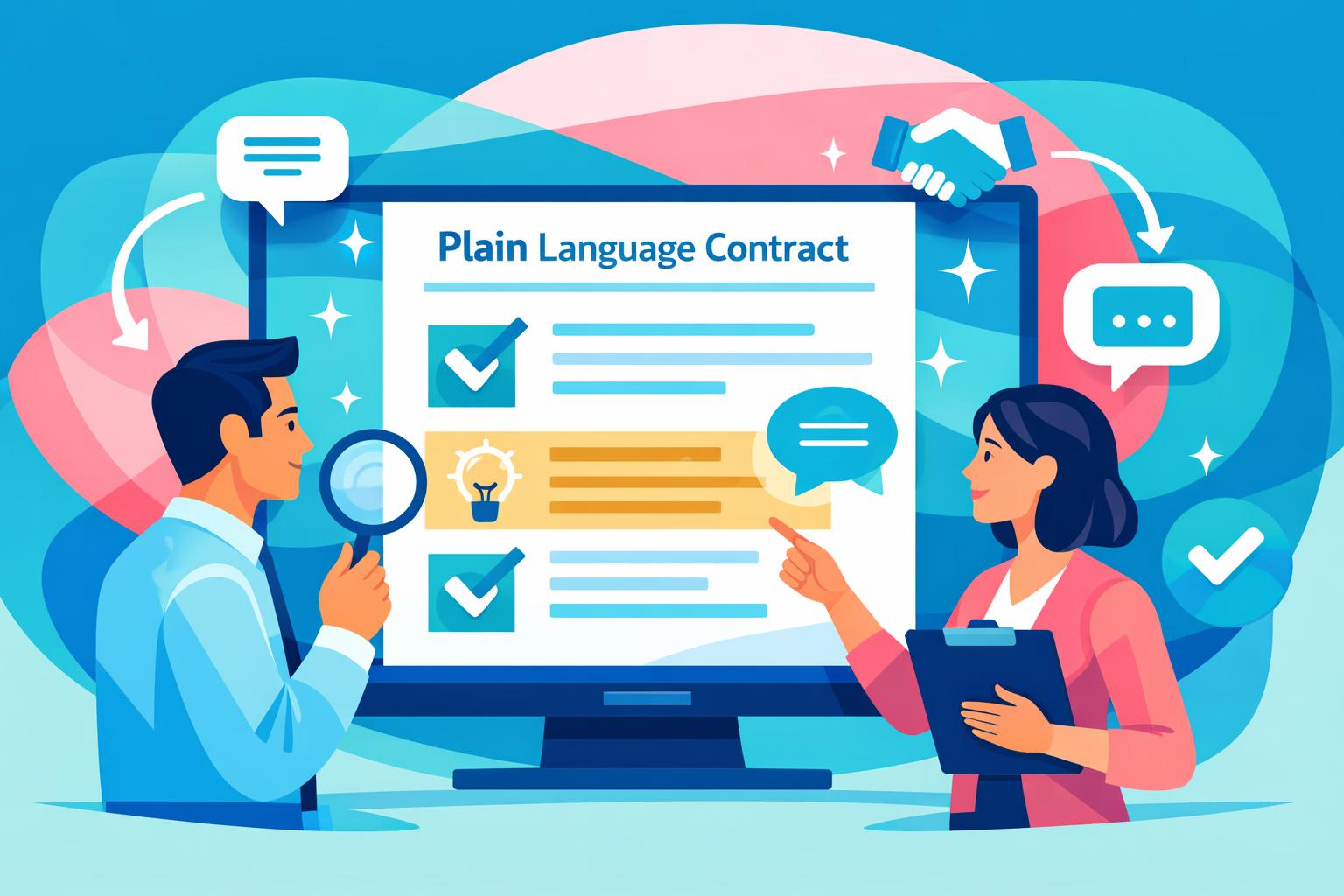
If your contracts routinely trigger “Can someone translate this?” you’re paying a hidden tax in deal time, internal confusion, and avoidable disputes. Plain language contracts replace that friction with clarity—without changing the legal effect of the agreement. In this post, you’ll learn what plain language drafting looks like in practice, why it tends to reduce disputes and speed negotiations, and how to start adopting it across templates and reviews. You’ll also see how tools can help you standardize clear drafting so it scales across teams, rather than relying on individual writing styles.
What plain language contracts mean (without “dumbing down” the deal)
A plain language contract is written so your intended business audience can understand it the first time they read it. That clarity doesn’t mean removing protections or oversimplifying rights and remedies. Instead, it’s about communicating the same obligations and outcomes more directly, so non-legal stakeholders can act on the document without guessing.
In practice, the shift is as much structural as it is linguistic. Shorter sentences make conditions easier to track, and active voice makes responsibility explicit so it’s clear who must do what. Additionally, fewer unnecessary defined terms reduce interpretive detours, and familiar wording replaces archaic phrases that add length without adding precision.
Organization matters just as much as word choice. Clear headings, logical sequencing, and helpful signposting let readers answer real questions quickly, such as “When does this renew?” or “What happens if we terminate?” If someone has to decode multiple cross-references to find a deadline, the contract is harder to use—and misuse becomes more likely.
“Plain language changes how the deal is communicated, not what the deal is.”
This distinction is often what reassures legal teams: clarity isn’t the enemy of rigor. In fact, unclear drafting can be the bigger risk because it increases the chance that two reasonable readers interpret the same clause differently. If you want to make clear drafting repeatable, automated contract drafting features in platforms like ClearContract help teams reuse approved, readable language consistently rather than reinventing clauses—or old habits—each time.
Why plain language reduces disputes and speeds negotiations
The strongest argument for plain language is practical: clearer contracts are faster to read, easier to explain internally, and simpler to negotiate externally. When obligations are stated plainly, fewer assumptions creep in and fewer misunderstandings accumulate across the life of the relationship. Furthermore, better organization makes exceptions and conditions harder to miss, reducing “surprise” later.
There’s also a compliance effect. When people actually understand what the contract requires, they’re more likely to follow it in day-to-day operations, especially in long-term commercial relationships where the agreement gets used rather than filed away. That reduces enforcement costs and ongoing friction, which is often where legal time quietly disappears.
When parties spend less time decoding clauses, negotiations shift back to business terms—and deal cycles shrink.
Negotiations often drag because teams debate what wording means rather than whether the wording reflects the right commercial position. Plain language reduces that waste: counterparties review faster, internal stakeholders outside legal can respond with more confidence, and redlines focus more on substance than stylistic cleanup. Over time, fewer rounds of back-and-forth compound into materially shorter timelines.
Technology can help you enforce clarity at scale, especially when you’re dealing with third-party paper. For example, AI-powered review workflows like ClearContract’s AI contract review can highlight unclear or missing clauses and suggest improvements aligned with plain language principles, so your team doesn’t have to manually rewrite every document from scratch.
Pro Tip: Treat plain language as a quality standard, not a “friendly tone.” The goal is effective communication that preserves legal effect, not a simplified document that hides complexity or softens unfair terms.
One caution matters: plain language should never be used to mask unfair terms or oversimplify complex rights. Clarity must go hand in hand with careful legal judgment. When done properly, plain language tends to strengthen contracts by narrowing interpretive gaps rather than introducing them.
Key Takeaways
- Plain language contracts improve comprehension, helping business users understand obligations, risks, and deadlines the first time they read an agreement.
- Better understanding can reduce disputes by leaving less room for conflicting interpretations and accidental non-compliance.
- Negotiations move faster when teams spend less time clarifying wording and more time aligning on business terms.
- Legal precision doesn’t have to suffer—you can preserve the same legal effect with clearer expression and structure.
- You can scale clarity with standardized templates and tools like a contract management platform that supports drafting, review, and reuse.
Next steps: standardize a small set of clear templates, then review your existing agreements with clarity in mind—especially clauses that regularly attract questions during negotiation. If you want to see how AI-supported workflows can help your team write clearer contracts and close deals faster, book a demo or explore the platform to see how it fits your process.
Related Reading
Continue exploring how clearer drafting fits into modern workflows with Plain Language Contracts: Faster Deals, Fewer Disputes.