Contract Risk in Supply Chains Reduce Disruption Fast
 Jørgen Højlund Wibe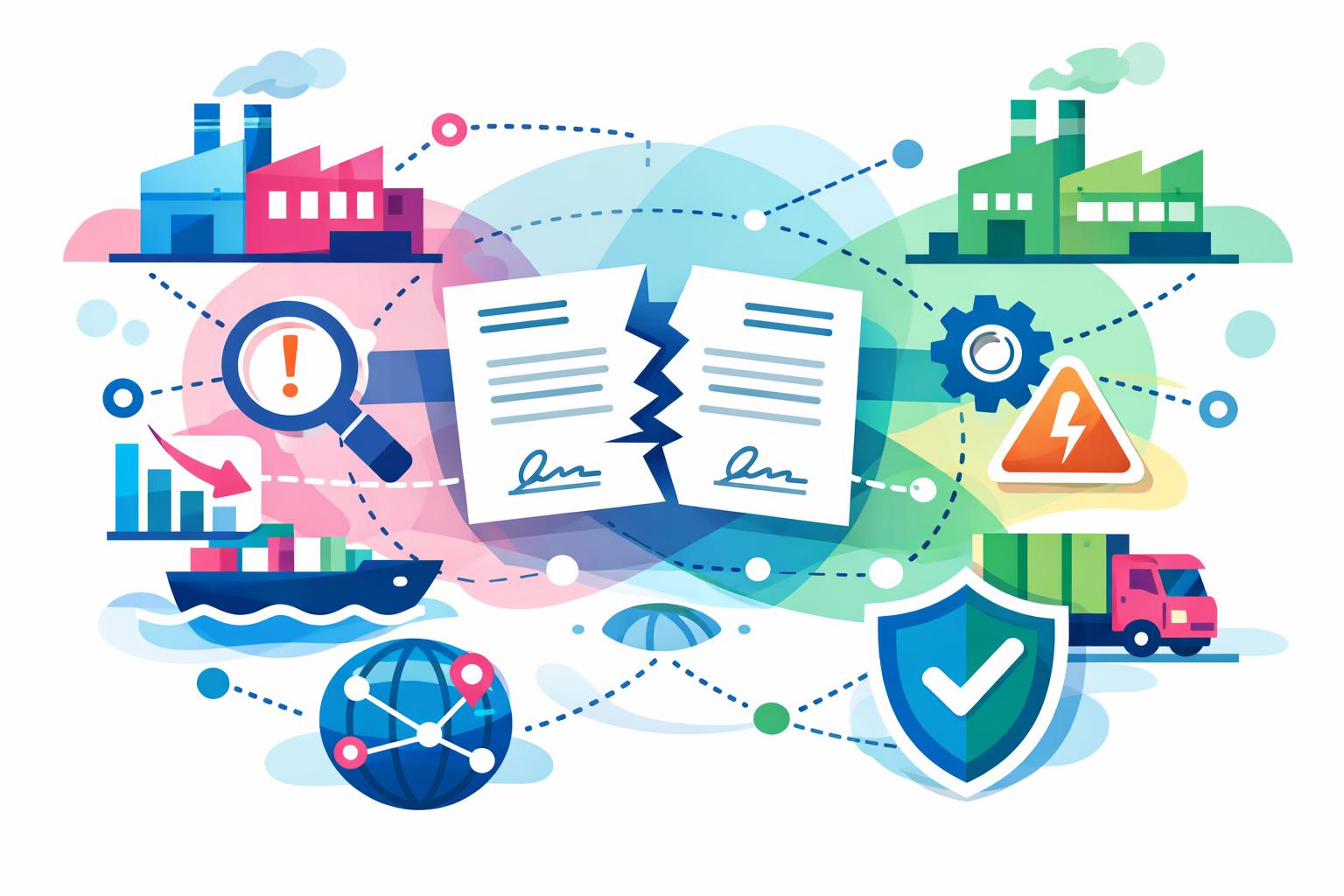
Global supply chains appear stable and efficient—until disruption strikes. A sudden tariff, factory shutdown, or failed supplier audit can stall operations overnight. At the center of these vulnerabilities lies contract risk in supply chains, quietly determining how well companies withstand external shocks. This article explains how contract risk emerges, why dependencies and geopolitical shifts amplify it, and how smarter, AI-driven contract terms can dramatically reduce disruption and protect operational continuity.
Where Contract Risk in Supply Chains Actually Comes From
Global supply chains now operate through multiple interconnected tiers, meaning contract risk rarely exists in isolation. A clause with one supplier can fail due to issues several tiers upstream or because external regulations evolve faster than the language in your contracts anticipates. This interdependence makes regular contract review essential—not optional.
Common root causes of contract risk include single-source dependencies that limit flexibility, geopolitical changes that upend pricing or legality, and compliance lapses stemming from outdated certifications or unclear obligations. For instance, if a supplier depends on a restricted export market, your entire production schedule may be disrupted overnight. Meanwhile, weak service levels or vague liability clauses can turn small delivery issues into major financial exposures.
These risks rarely remain contained. A delay at one supplier quickly cascades through production lines, logistics flows, and payment cycles. Historical crises—from natural disasters in key manufacturing hubs to cyber incidents halting logistics—illustrate how unexamined contracts can intensify rather than mitigate disruption. Recognizing that every agreement is a living document ensures organizations remain adaptive, not reactive.
“Contracts don’t cause disruptions—but they define how effectively your organization can respond when disruption happens.”
How Smarter Contract Terms Reduce Supply Chain Disruption
Organizations are increasingly shifting from reactive contract management to proactive risk prevention. Modern agreements incorporate clauses that ensure visibility into sub-suppliers, mandate notifications when sourcing changes, and allow volume adjustment when concentration risk becomes too high. These updates make risks visible long before they become operational failures.
Contracts that clearly allocate responsibility for geopolitical changes also outperform those that do not. Tariffs, sanctions, and rapidly changing trade policies can alter cost structures overnight. Effective clauses specify how cost adjustments occur, when termination applies, and who assumes compliance burdens, reducing disputes and ensuring business continuity. AI Contract Review helps legal and procurement teams identify missing compliance obligations, weak SLA language, or outdated force majeure terms—enhancing readiness before signature.
Once signed, the challenge becomes execution. Many disruptions escalate because performance deviations remain unnoticed until too late. By linking operational systems to centralized Contract Management, organizations gain an active monitoring capability that highlights gaps in delivery, compliance, and renewal cycles. This connectivity transforms the archive function into an operational safeguard.
Moreover, combining Tasks & Deadlines with Reports & Analytics allows teams to track predefined risk thresholds. ClearContract’s autonomous AI Agents automatically trigger alerts and approvals when metrics signal potential disruption, keeping operations and governance aligned without manual overhead.
Pro Tip: Tie supplier payments to verified delivery and compliance milestones. This structure reduces financial exposure and prevents small operational failures from turning into costly disputes.
Key Takeaways
- Contract risk often emerges from assumptions about supplier reliability and poorly defined obligations during external change.
- Geopolitical volatility and regulatory dynamics expose weak pricing, termination, and compliance terms fastest.
- Smarter contracts prioritize prevention, transparency, and enforceability over reactive remedies.
- Centralized Contract Management plus AI Contract Review increase visibility and enable proactive mitigation.
- Review and modernize your supply chain agreements before the next disruption reveals hidden vulnerabilities — book a ClearContract demo to start.
Related Reading
Explore AI Contract Review: How Automation Improves Legal Precision to learn how AI does the work — not just talks about it — across proactive contract governance.