

Contract Management for Procurement Teams Made Practical
 Jørgen Højlund Wibe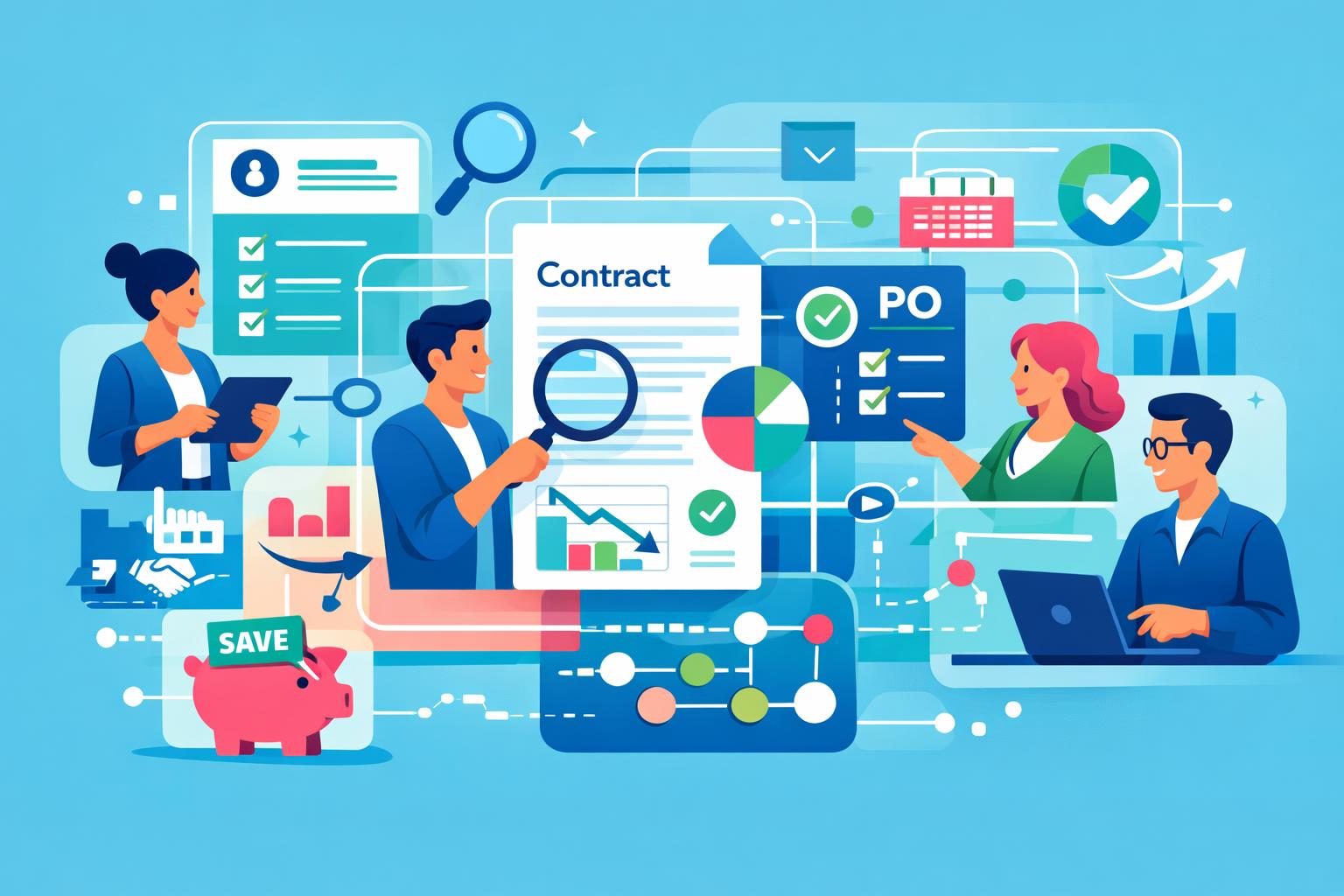
If your contracts still live as PDFs in shared drives, procurement value often leaks out in the weeks and months after signature. Modern contract management for procurement teams is about turning negotiated terms into day-to-day controls—so onboarding doesn’t stall, purchase orders stay on-contract, savings are provable, and renewals don’t become last-minute emergencies.
In this practical guide, you’ll see how procurement teams use contract management tools across the full lifecycle, from supplier intake to renewal decisions. We’ll also cover what changes when contract data becomes structured and searchable, and how platforms like ClearContract support faster workflows without increasing risk.
From paperwork to procurement control: why contract management matters
Contract management sits between sourcing and execution. Sourcing decides who you buy from and at what terms; contract management ensures those terms actually show up in purchasing behavior, invoice outcomes, and supplier performance over time. Without that bridge, “negotiated value” stays theoretical and the business defaults to workarounds.
The biggest shift is moving away from shared drives or ERP attachments as the contract “system.” Dedicated platforms structure key contract data—pricing, obligations, renewal dates, SLAs—so procurement can use contracts as an operating layer across teams. For context on how this applies specifically to your role, start here: contract management for procurement teams.
“The teams that win treat contracts as a data-rich system that connects sourcing decisions to day-to-day execution.”
Four procurement workflows powered by contract data
When contracts are treated as structured data instead of static documents, the same agreement can drive multiple procurement workflows. That’s where speed and control come from: one source of truth for terms, approvals, and renewal timelines, usable by procurement, legal, and finance without endless email chains.
Supplier onboarding built around the contract
Onboarding is where friction shows up first: a supplier can’t be used until risk checks are complete, terms are signed, and vendor records are created correctly downstream. In contrast, a contract management platform typically starts onboarding with a guided intake that routes requests based on category, value, or risk, then applies approved templates such as NDAs or MSAs.
After signature, the contract becomes the source of truth for onboarding data, including payment terms, currencies, governing law, and risk flags. Platforms like ClearContract combine centralized templates with AI-assisted extraction so you capture those fields once and reuse them consistently, reducing rework and preventing messy vendor records from spreading into procurement or ERP systems.
Pro Tip: Agree on templates, fallback positions, and risk thresholds with legal upfront. You’ll reduce escalations and keep onboarding repeatable, even when stakeholders push for exceptions.
Purchase order alignment that enforces negotiated deals
The next problem is compliance: buyers can raise POs that ignore the contract, and negotiated pricing becomes “true” only in presentations. Effective tools link each agreement to the transactions it governs, so requisitions can reference the right contract and pull in contracted pricing, rate cards, or volume discounts automatically.
Additionally, contract-backed controls help accounts payable match invoices not only to POs but to the underlying contract, reducing disputes and overbilling. When obligations like delivery times or service levels are stored as structured fields, procurement can track performance instead of relying on anecdotal complaints. ClearContract supports this by extracting commercial terms and making them searchable and reportable across teams.
Savings tracking that stands up to finance scrutiny
Procurement credibility often hinges on the gap between negotiated and realized savings. Contract management tools shrink that gap by capturing baseline pricing and negotiated improvements at signing—whether that’s lower unit costs, rebates, or value-added services—and keeping those assumptions attached to the deal as measurable data.
Once you connect contract terms to spend and invoice data, you can quantify leakage, show how much spend flowed through contracted suppliers, and verify whether rebate thresholds were reached. Reporting capabilities, including ClearContract’s reporting tools, help you move from anecdotal wins to consistent metrics that finance can validate.
Renewal management without unpleasant surprises
Unmanaged renewals quietly destroy value through missed notice periods, auto-extensions, and unchallenged price escalations. Contract management platforms prevent this by keeping renewal timelines as structured data, then triggering alerts well before deadlines so renewals become planned sourcing events rather than emergency negotiations.
Furthermore, performance history gathered during the term—delivery issues, SLA breaches, recurring invoice disputes—becomes visible at renewal time and strengthens your negotiating position. Portfolio-level views also let you plan renewal “waves” by category or region, so workload and supplier strategy stay proactive.
Key Takeaways
The strategic shift is simple: treat contracts as living systems, not archived files. When your agreements are structured, searchable, and connected to procurement workflows, you can move faster without adding risk—and you can prove the value you negotiated.
- Supplier onboarding speeds up and becomes more consistent because the contract drives approvals and supplier master data.
- POs and invoices align to negotiated terms, reducing maverick spend, overbilling, and downstream disputes.
- Savings tracking shifts from assumptions to measurable outcomes when contract terms connect to spend and invoice data.
- Renewals become proactive sourcing moments with alerts, performance context, and portfolio visibility—no more last-minute surprises.
Next, assess whether your contracts are genuinely usable across onboarding, purchasing, savings reporting, and renewals—or whether they’re still locked away in PDFs. If you want to see what a data-driven approach looks like in practice, explore ClearContract’s approach to contract management or book a walkthrough to evaluate fit for your procurement workflows.
Related Reading
Revisit Contract Management for Procurement Teams: Practical Guide to map these ideas to your supplier lifecycle and operating model.
