Contract management for centralised procurement models
 Jørgen Højlund Wibe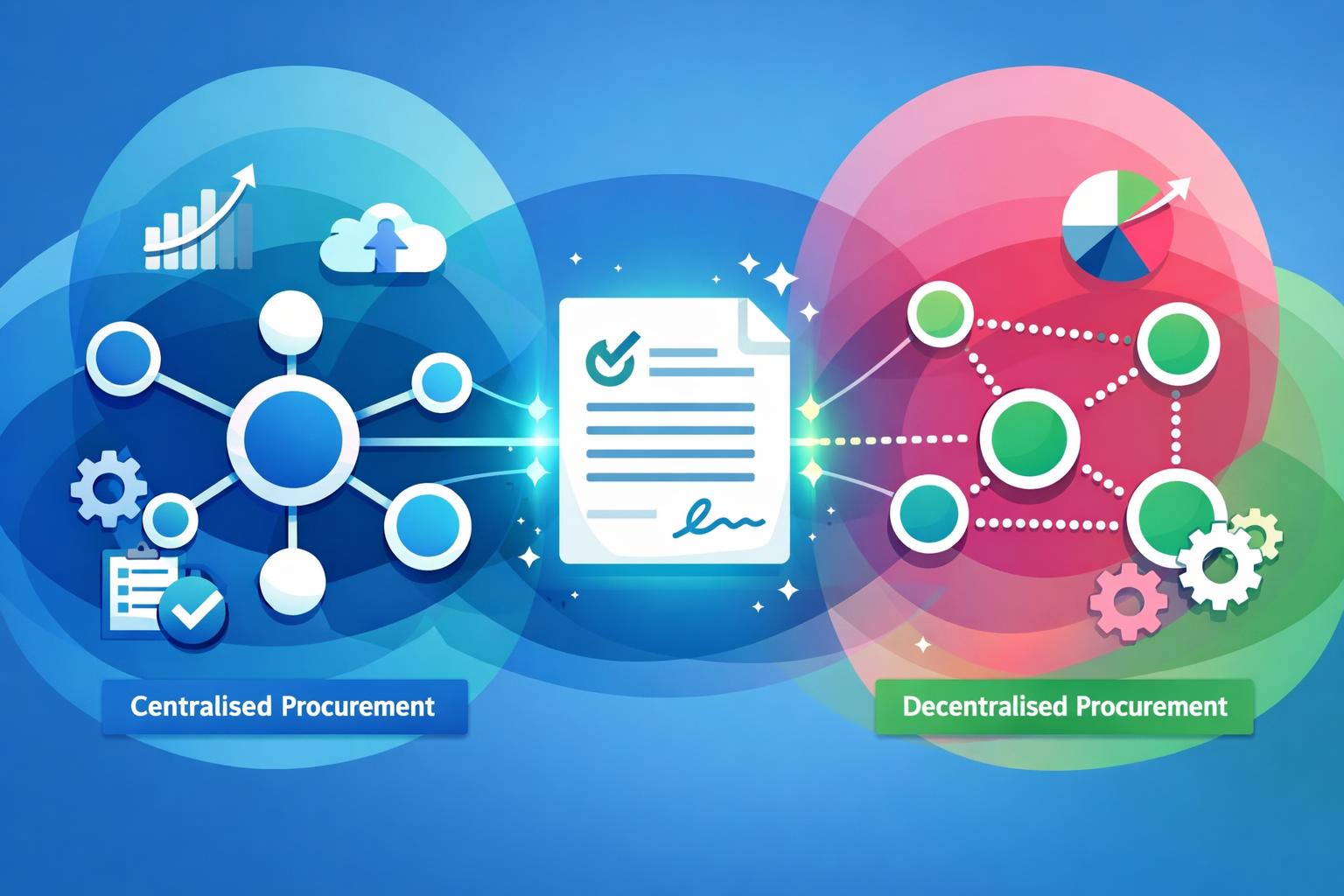
Few topics stir internal debate quite like centralised vs decentralised procurement. Finance teams seek control and savings, operations value speed, and legal demands consistency. Procurement leaders are often in the middle, trying to balance these priorities without slowing the business. This guide explains how both models work, where each excels or falls short, and why contract management is the overlooked factor that determines which structure actually performs. Whether you lean centralised, decentralised, or prefer a hybrid, this post offers practical insight into how modern contract tools keep procurement efficient and compliant.
Centralised vs Decentralised Procurement: How the Models Differ
Procurement models primarily differ in where decisions occur. Centralised procurement consolidates control within one team, typically at headquarters, ensuring aggregated spend, consistent processes, and broad oversight. Decentralised procurement, on the other hand, spreads purchasing authority across departments or regions, letting teams buy closer to operational needs and timelines. Both can work effectively, but each comes with trade-offs in cost, control, and flexibility.
Centralisation usually offers stronger negotiating power and clearer compliance standards, though decisions may slow down. In contrast, decentralisation allows faster responses but often sacrifices spend visibility and price leverage. These differences explain why many organisations find themselves debating structure repeatedly. The real deciding factor often lies not in procurement itself—but in how contracts are managed, stored, and reviewed.
“The right contract management system determines whether any procurement model delivers real accountability and cost efficiency.”
The Role of Contract Management in Procurement Models
In centralised procurement, contract management ensures control and consistency. By using shared templates, negotiated frameworks, and AI Contract Review, central teams can enforce policies without manually handling every document. Platforms such as ClearContract’s unified Contract Management archive allow for full visibility into obligations, renewal timelines, and supplier performance—making scaling practical and secure.
For decentralised procurement, contract management protects autonomy while reducing risk. Shared access to agreements prevents duplicate negotiations and lets teams reuse proven clauses. Embedded legal assistance helps buyers address contract gaps without escalating every detail. With transparent data and automated reports, leadership gains oversight even while local teams move quickly. This structure supports organisational flexibility without compromising accountability.
Hybrid procurement models succeed when contract management connects strategy to local execution.
Many organisations now adopt a center-led model, blending centralised standards with decentralised execution. Contract workflows route documents automatically, flag risks, and standardise data collection across locations. This balance—the ability to combine speed and governance—ultimately depends on how integrated your procurement and contract systems are.
Key Takeaways
- Both centralised and decentralised procurement can deliver strong results when backed by robust contract visibility and ClearContract’s autonomous legal department running 24/7.
- Centralised teams benefit from standardised templates and AI Contract Review that maintains compliance without slowing negotiation.
- Decentralised teams thrive when equipped with shared repositories and embedded legal support for independent but safe decisions.
- Hybrid models rely on Tasks & Deadlines automation that ensures both agility and control across departments.
- Before changing procurement strategy, evaluate how your contracts are managed—visibility and accessibility are what drive real efficiency.
Related Reading
Explore How AI Contract Review Transforms Procurement Efficiency for deeper insight into how automation supports both procurement models.
See how ClearContract’s Contract Management and AI Contract Review fit your procurement model. Book a demo.