

Contract Dispute Resolution Process: A Practical Escalation and Response Guide
 Christian Lambertsen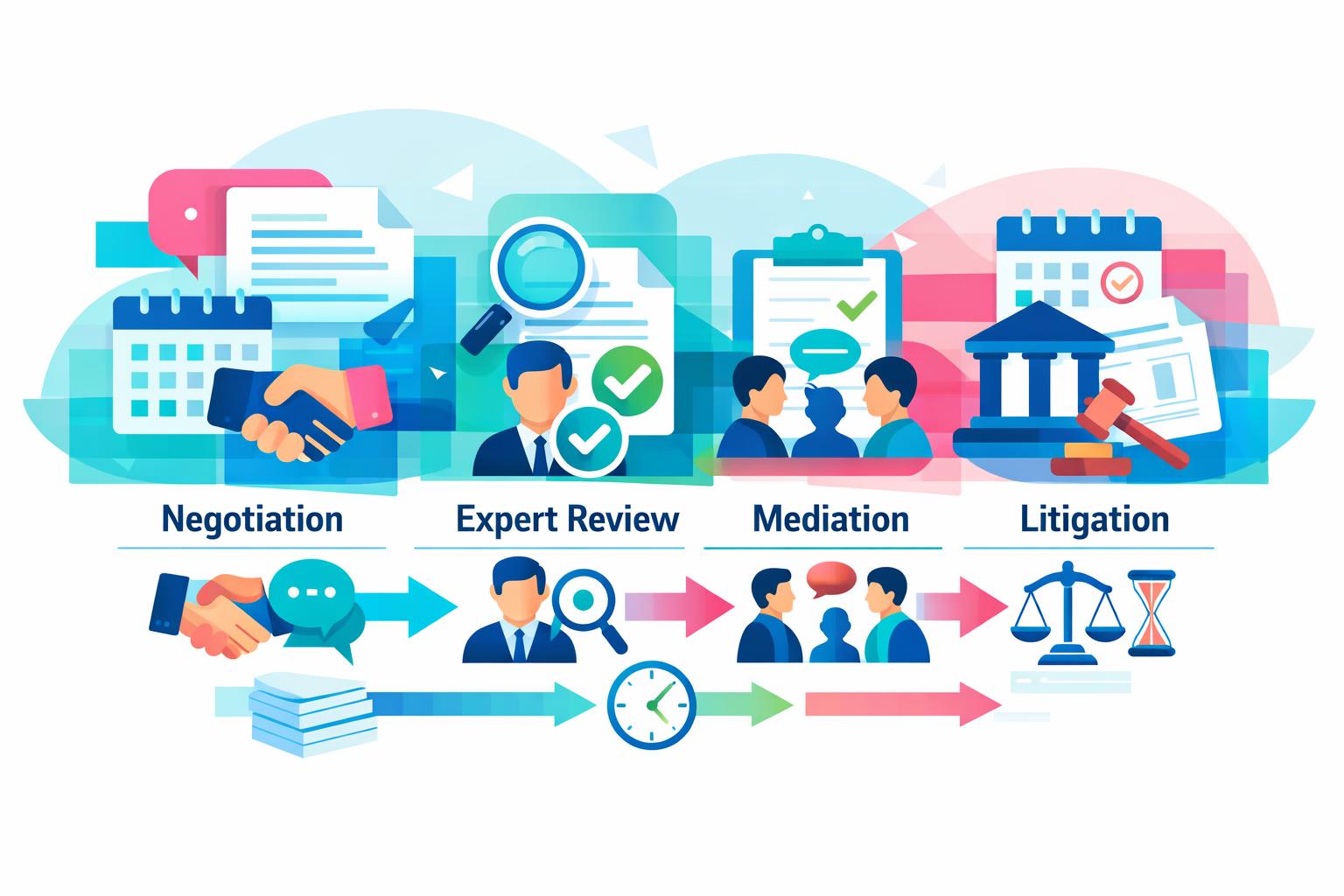
A contract dispute resolution process is the practical route a business follows when an issue moves beyond routine delivery, payment, scope or change discussions. The aim is not to predict a legal result. It is to ensure the right people work from the current agreement, the relevant facts and a clear next decision.
This is general business information, not legal advice. A live dispute, the governing law, the agreement and the parties’ circumstances may require qualified advice.
Start by separating the issue from the response
Many disputes begin as an operational question: a delivery differs from expectations, a payment is challenged, a change was not recorded or a party believes a commitment has not been met. Before choosing a route, make the issue specific enough for the team to discuss.
- What is the current agreement and which signed amendments or notices matter?
- What happened, and what records support that account?
- What commitment, date, payment, delivery, change or decision is in question?
- What does the business need to decide next?
- Who is accountable for coordinating the response?
A short issue record helps Legal, Procurement, Finance and the operational owner work from the same starting point. It does not decide the legal position or replace advice.
Use a proportionate escalation path
A workable contract dispute resolution process usually moves from clarification toward a more formal route only when necessary. The agreement may set a required sequence, so the team should check the relevant wording before assuming that a conversation, mediation, arbitration or court proceeding is the next step.
- Confirm the record. Locate the executed agreement, amendments, notices, relevant correspondence and a concise timeline.
- Identify the decision owner. Separate people who provide facts or specialist input from people authorised to make a commercial decision.
- Clarify the immediate question. State what needs resolving now, such as a performance concern, payment question, scope change or proposed remedy.
- Check the agreed route. Review notice, escalation, governing-law, jurisdiction, dispute-resolution and termination provisions together.
- Record the next action. Capture the communication to be made, the person responsible and the point at which the team will reassess.
Match the working approach to the problem
| Situation | Useful preparation question | Next practical focus |
|---|---|---|
| Delivery, scope or change disagreement | Is the current requirement and change history clear? | Prepare a shared timeline and identify the decision needed. |
| Payment or measurement question | What contract record and underlying evidence need to be compared? | Define the specific question and the people who can assess it. |
| Relationship under pressure | Is there still a realistic commercial question to discuss? | Confirm authority, communication route and any agreed preliminary step. |
| Material or urgent concern | What does the agreement require and who needs advice? | Escalate internally promptly and preserve the relevant record. |
The table is an operational aid, not a substitute for interpreting a clause. For clause-level preparation, see the dispute resolution in contracts checklist. For a narrower discussion of mediation wording, see the mediation clause guide.
Keep the record decision-ready
Dispute work becomes harder when the team has to reconstruct the governing version, the communication history and the decision trail at the same time. A decision-ready record can include the current document chain, the issue timeline, the people involved, the business impact described by the owner, correspondence that matters and the next internal decision.
Be careful not to turn a working note into an unsupported conclusion. Record facts, open questions, responsible people and next actions clearly. Keep legal assessment with the people authorised to give it.
Common process mistakes
- Using an older draft: confirm the executed agreement and later changes before acting on a clause.
- Mixing facts with assumptions: distinguish what the record shows from what still needs to be checked.
- Leaving authority unclear: contributors and decision-makers may have different roles.
- Reading one clause in isolation: notice, governing-law, dispute-resolution and termination wording can be connected.
- Waiting to record the next step: a clear owner and follow-up point reduce avoidable confusion.
Key takeaway
A practical dispute response starts with a reliable agreement record, a bounded issue and a clear next decision. ClearContract supports organisations in receiving, reviewing, filing, monitoring and managing contracts under customer-defined rules, while people retain decision and approval authority.
If you are evaluating a more consistent approach to contract work across teams, Book a demo.