Cloud Security Contract Management Vendor Checklist
 Jørgen Højlund Wibe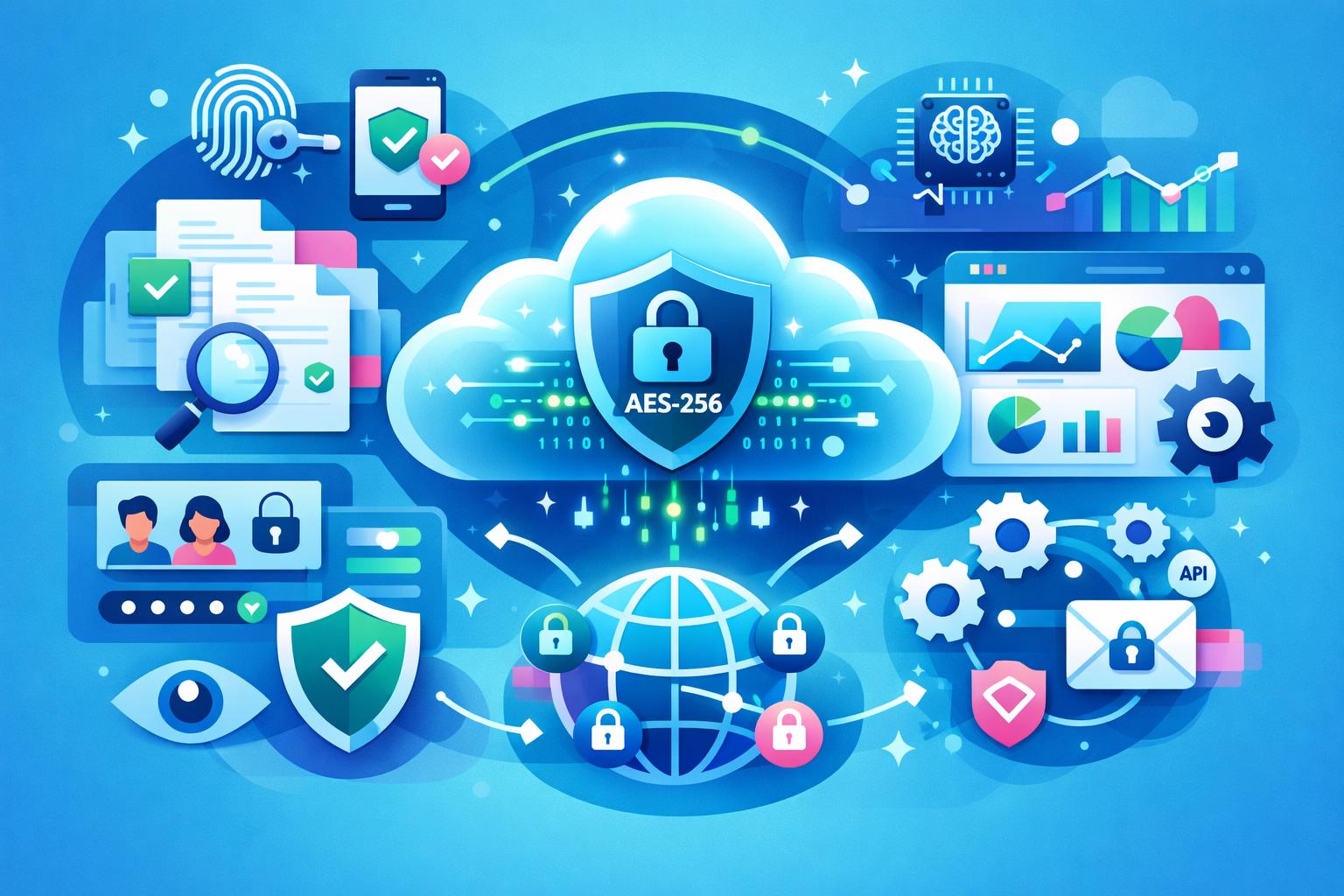
Cloud security contract management is no longer just an IT checkbox—it’s a direct line to operational risk, regulatory exposure, and customer trust. Contracts now hold some of your most sensitive business data, from pricing models and vendor obligations to customer details and financial terms. When that information moves into a cloud-based contract lifecycle management (CLM) platform, the security decisions you make shape what happens during an incident, an audit, or a dispute.
This guide explains what to evaluate beyond “enterprise-grade security,” including encryption, key management, access controls, auditability, compliance frameworks like SOC 2 and ISO 27001, and GDPR hosting and residency requirements. You’ll leave with practical questions to ask vendors and a clearer view of what mature, layered security looks like in real contract workflows.
What Strong Cloud Security Contract Management Looks Like
A secure contract management platform has to protect confidentiality, integrity, and availability at the same time. In practice, that means only authorized people can access agreements, changes are detectable and attributable, and legal and business teams can reliably retrieve critical contracts when they need them.
Encryption is foundational, but you should confirm exactly where it applies. AES-256 is effectively the baseline for stored data in modern contract repositories, covering documents, metadata, attachments, and extracted contract information. Additionally, encryption in transit via TLS 1.2+ should protect data moving between browsers, APIs, integrations, and cloud services.
However, storage encryption alone is not enough when your CLM connects to CRM systems, procurement tools, finance platforms, e-signature providers, and AI services. Every integration expands the attack surface, so secure API communication matters as much as document storage itself. If a vendor can’t explain how integrations are secured end-to-end, you’re likely inheriting hidden risk.
“A platform that encrypts stored contracts but leaves transmissions or integrations exposed creates unnecessary risk—because workflows, not repositories, are what attackers target.”
Encryption also supports regulatory expectations under GDPR and similar privacy regimes, since contracts often include names, signatures, contact information, compensation terms, and customer details. Still, the overlooked detail is key ownership: some vendors manage all keys internally, while others offer customer-managed keys or dedicated vaults backed by hardware security modules. That distinction influences both security posture and compliance flexibility.
Identity and access management is the next control layer. A strong platform supports multi-factor authentication, single sign-on, and granular role-based permissions so a procurement manager doesn’t automatically get the same access as external counsel or a finance administrator. Platforms like ClearContract support centralized access governance inside their contract management system, which helps you maintain visibility without handing every user unrestricted access.
Finally, treat auditability and monitoring as non-negotiable operational controls. Every upload, edit, approval, download, and sharing event should be logged automatically, with immutable histories that support investigations, compliance audits, and incident response. Some platforms also apply AI-driven monitoring to flag unusual behavior such as large exports, off-hours access, or unexpected permission changes, improving detection speed even when prevention fails.
SOC 2, ISO 27001, and GDPR Hosting Requirements Explained
Certifications can help you validate a vendor’s security claims, but only if you understand what they actually assess. SOC 2 is one of the most common attestations for SaaS providers: Type I evaluates whether controls are designed appropriately at a point in time, while Type II tests whether those controls operate effectively over an extended period. For cloud security contract management, SOC 2 Type II is generally the stronger benchmark because it demonstrates operational discipline over time.
Even then, confirmation isn’t enough—you should review scope and exceptions. SOC 2 reviews typically cover security, availability, confidentiality, processing integrity, and privacy, but the report may not include every system that touches contract data. If a vendor’s AI pipeline, logging stack, or integration layer sits outside scope, you need to know that before you rely on the attestation.
ISO 27001 approaches assurance differently by evaluating whether the vendor runs a formal information security management system, including risk management, governance, training, vendor management, incident response, and continuous improvement. Importantly, a vendor does not inherit ISO 27001 simply because it hosts on AWS or Azure; there is a meaningful difference between an infrastructure provider’s certification and the CLM vendor maintaining an ISO 27001-certified program.
GDPR hosting and residency requirements add another layer, because contracts frequently contain personal information. In typical CLM usage, you act as the data controller and the vendor acts as the data processor, which means you must ensure the processor provides sufficient safeguards. That includes encryption, access controls, logging, incident response, and documented processing agreements, along with clarity on where data is stored and processed.
Pro Tip: Ask vendors to map data flow end-to-end, including where production data, backups, logs, and analytics run—then verify whether EU-only hosting configurations are available if your contracts contain personal data subject to GDPR.
A practical scenario highlights why residency matters: a European sales team uploads customer agreements containing personal data into a platform hosted outside the EU without appropriate transfer safeguards. Even if the platform is secure, the hosting arrangement can still create GDPR compliance exposure. This is why vendor transparency around hosting locations, subprocessors, breach notification procedures, and transfer mechanisms is essential.
Operational controls should reinforce these assurances in day-to-day use, especially as AI becomes more common in legal workflows. If you evaluate AI features like clause extraction, automated review, or analysis, confirm they maintain permission boundaries and auditability rather than routing sensitive agreements through uncontrolled third parties. ClearContract’s AI contract review tools and automated workflow capabilities are designed to operate within centralized governance structures so you can automate without losing oversight of sensitive contract data.
Additionally, strong reporting helps compliance teams prove that policies are followed consistently across the contract lifecycle. Centralized visibility can surface access anomalies, upcoming obligations, and unusual activity before issues escalate, and platforms with advanced contract reporting features make audit readiness materially easier.
Key Takeaways
- Encryption should protect both stored and transmitted data using modern standards like AES-256 and TLS 1.2+, with clear answers on key ownership, rotation, and backup coverage.
- SOC 2 Type II and ISO 27001 provide stronger assurance when you validate scope, exceptions, and the vendor’s real operational controls—not just the logo on a sales deck.
- GDPR compliance depends on residency, subprocessors, and data transfer safeguards, so you should verify where production data, backups, logs, and analytics are stored and processed.
- Access management, audit trails, and monitoring are as important as encryption because they reduce blast radius and speed up detection and response.
- Treat cloud contract security as a shared responsibility and a long-term partnership, and pressure-test vendor claims with detailed, practical questions.
Next, turn your evaluation into a repeatable process: request documentation, review audit report scope, confirm hosting and subprocessors, and test access controls and logging with real workflow scenarios. If you’re evaluating secure AI-powered contract workflows and centralized governance capabilities, explore ClearContract’s platform or book a demo to see how modern contract management security works in practice.
Related Reading
Check out contract management system for more context on centralized governance, or explore AI contract review tools to see how secure automation fits into legal workflows.