

AI Contract Risk Scoring Model for Faster Reviews
 Jørgen Højlund Wibe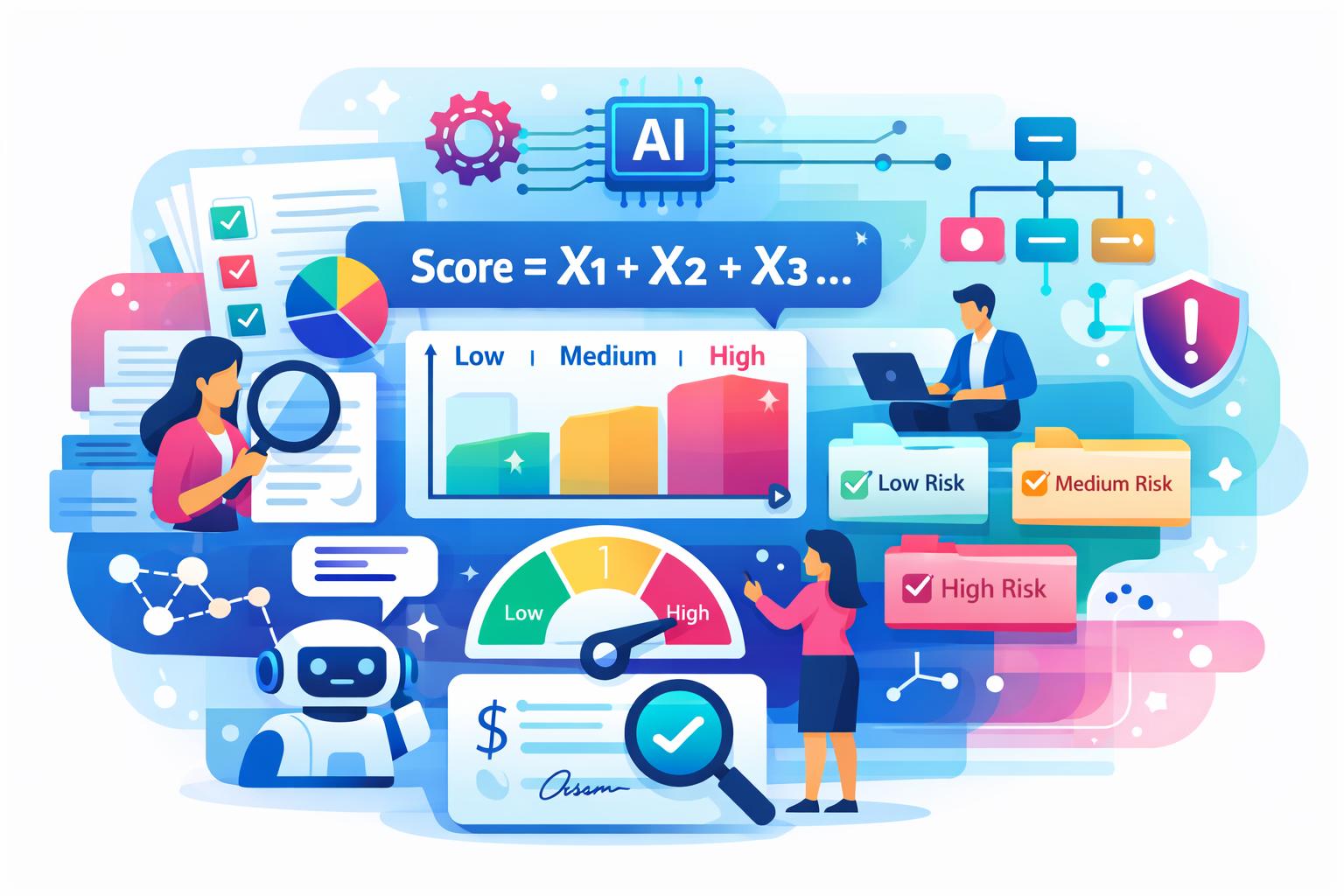
Introduction
This practical guide walks you through how to build a contract risk scoring model that translates legal judgment into measurable risk scores. You’ll learn to define risk categories, quantify risks, automate scoring with autonomous AI Agents, and ensure consistent contract reviews without a data science background.
What You’ll Need
- Access to contract drafts or executed agreements
- Basic legal knowledge of contract clauses
- Input from legal, finance, and business teams
- A scoring tool like Excel, Google Sheets, or a CLM platform
- Optional: ClearContract’s AI Contract Review module
- Estimated time: 1–2 weeks to set up; minutes per contract once live
Step 1: Define Risk Categories and Criteria
Establish what you are scoring and why. Define specific areas of risk relevant to your contracts so your model has a consistent scoring base.
- List key risk categories: financial, legal, operational, and regulatory.
- Break each category into measurable criteria, such as “liability cap below contract value.”
- Adjust the list based on contract type, jurisdiction, or value.
💡 Pro Tip: Start with 8–12 criteria for simplicity, then expand once the model is stable.
Step 2: Identify Clause-Level Risks
Pinpoint where risk actually exists in your contracts by analyzing clause-level details.
- Review contracts against your checklist and flag red flags, such as uncapped liability or missing indemnities.
- Validate findings with business stakeholders when financial or operational risk applies.
ClearContract’s AI Contract Review automatically extracts clauses and highlights deviations from your internal playbook—ideal for scaling reviews (Learn more).
Step 3: Assign Probability, Impact, and Weights
Translate qualitative judgment into quantitative risk scores that can be compared across contracts.
- Score Probability and Impact on a 1–10 scale.
- Assign a Weight to each criterion based on business importance.
- Use a simple formula to calculate total risk per item.
Risk Score = Probability × Impact × WeightCalculates each criterion’s weighted risk score.
Step 4: Aggregate Scores and Classify Risk Levels
Convert individual clause scores into actionable overall contract ratings that guide review priorities.
- Sum all weighted scores for an overall contract score (typically 0–100).
- Set thresholds such as Critical, High, Medium, and Low to classify risk.
- Visualize data using a simple matrix or heat map to highlight priority contracts.
Step 5: Document Risks and Mitigation Actions
Ensure that identified risks lead to measurable actions by documenting them in a central risk register.
- Create a structured record of clause name, risk score, owner, and actions.
- Assign deadlines and integrate into approval workflows.
- Maintain a repository for audit and benchmarking across reviews.
The Tasks & Deadlines module standardizes reviews by turning every risk action into a tracked, assignable task (explore Tasks & Deadlines).
Step 6: Automate Risk Scoring With AI
Enhance efficiency and consistency by using the Review Agent to score contracts automatically.
- Set up playbooks with predefined clause language and risk levels.
- Let the Review Agent extract clauses, compare against approved standards, and assign scores.
- Trigger alerts or approval tasks when thresholds are exceeded.
- Generate portfolio-level Reports & Analytics to monitor overall risk exposure.
ClearContract’s autonomous AI Agents cut review time by ~80% (averaging 2 hours saved per contract) while maintaining compliance — AI does the work, not just talks about it.
Step 7: Review, Validate, and Improve the Model
Keep your model accurate by recalibrating it periodically as contracts, laws, or risk events change.
- Recalculate scores whenever material terms or regulations change.
- Validate your scoring against historical dispute data or incidents.
- Adjust weights annually to align with business priorities.
💡 Pro Tip: Start rule-based and layer in AI Agents once your dataset grows enough for learning-based optimization.
Step 8: Verify Your Model Works
Test the model to ensure it drives consistent and meaningful results.
- Confirm that high-risk contracts always escalate for review.
- Check that similar contracts receive consistent scores.
- Measure review-time reductions and stakeholder confidence.
- Score 10–20 past contracts to align with known issues.
Common Issues & Solutions
- Issue: Scores feel subjective
Solution: Standardize scales and validate results using historical contract data. - Issue: Too many high-risk flags
Solution: Adjust weights and thresholds to minimize false positives. - Issue: Model becomes outdated
Solution: Schedule quarterly reviews and trigger rescoring after significant events.
Key Takeaways
- Define clear categories and scoring rules before automation.
- Use autonomous AI Agents to enhance efficiency, not replace legal judgment.
- Regularly recalibrate your weights and scoring thresholds.
- Document risks thoroughly to ensure accountability and auditability.
- Integrate the model into your contract lifecycle via Contract Management for full visibility — or book a demo to see it run.
