Manufacturing Contract Management for Supply Chain Risk
 Jørgen Højlund Wibe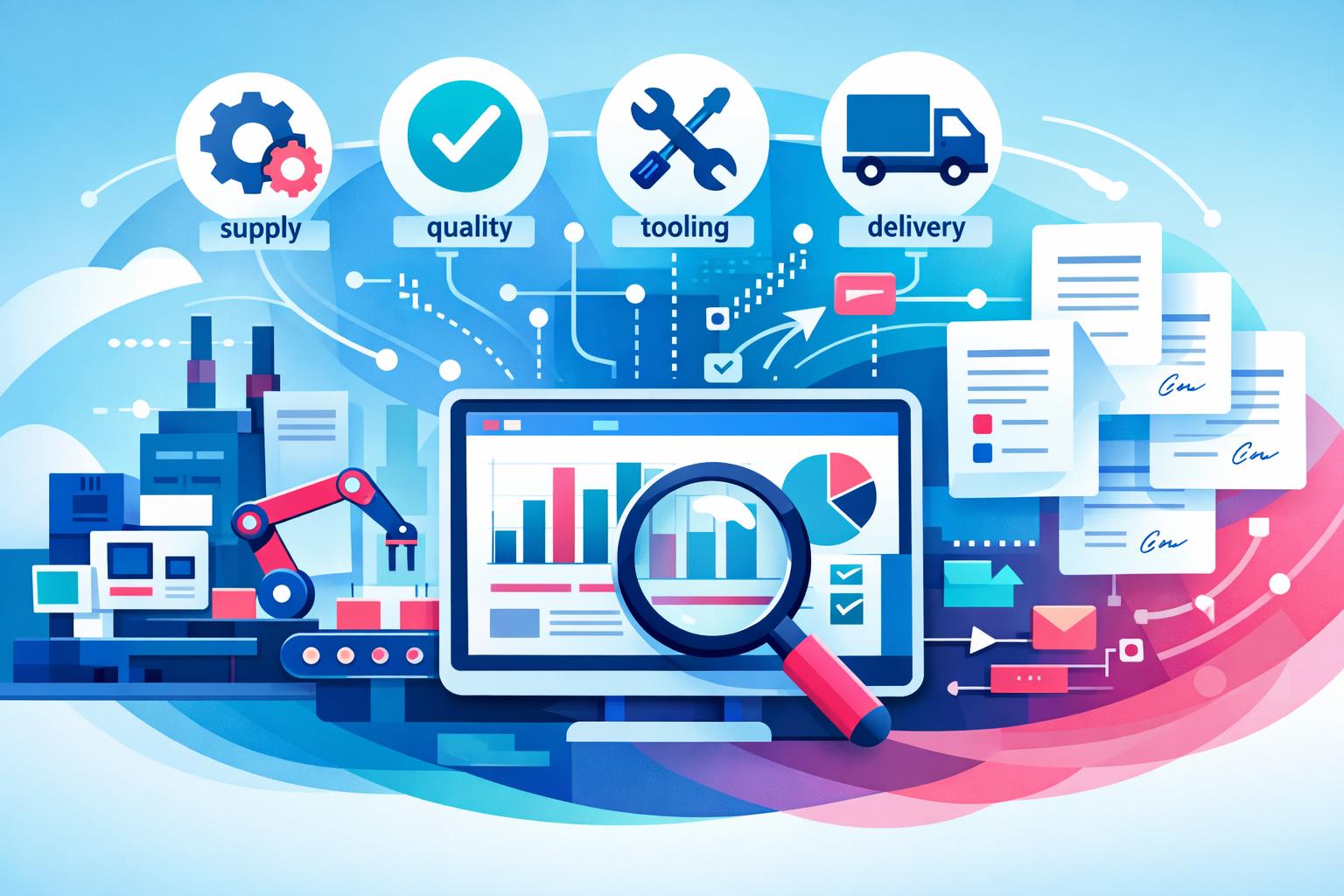
Most supply chain failures don’t start on the factory floor—they start in the fine print. When delivery terms don’t match real lead times, quality language is open to interpretation, or tooling ownership is unclear, the result is familiar: line stoppages, cost overruns, and avoidable disputes. Manufacturing contract management has shifted from a back-office task to an operational discipline you can use to protect continuity and margins.
This post breaks down where manufacturing contracts carry the most day-to-day risk—supply agreements, quality assurance clauses, tooling control, and just-in-time delivery terms—and how modern platforms help you turn complex legal commitments into obligations your teams can actually find, track, and enforce.
What contract management looks like on the shop floor
In manufacturing, contracts aren’t abstract documents—they define how materials flow, how quality gets measured, who controls critical assets, and what happens when forecasts change. Effective contract management connects those commitments to procurement, production planning, and quality processes so obligations don’t disappear into email threads, shared drives, and spreadsheets.
That connection matters because small ambiguities can create big operational exposure, especially across OEMs, contract manufacturers, raw material suppliers, and distributors. When performance tracking and renewals are fragmented, pricing terms get missed, remedies go unclaimed, and agreements quietly roll over without reassessment—eroding a noticeable share of annual spend.
“In volatile supply chains, the contract lifecycle is an operational system—not a filing system.”
The four contract areas that most affect production continuity
Your highest-impact risks typically cluster in a few repeatable places. First, supply agreements do far more than set pricing—they define capacity commitments, ordering mechanics, and the difference between binding and non-binding forecast windows. When you run lean inventories, those forecast rules determine who absorbs shortages, delays, or demand spikes, particularly when index-linked price adjustments and scheduled review windows are hard to monitor.
Second, quality assurance clauses must translate “quality” into measurable obligations, including acceptance criteria, inspection rights, defect thresholds, and remedies like rework, replacement, refunds, or chargebacks for scrap and downtime. At scale, the challenge becomes consistency across dozens or hundreds of suppliers; tools like ClearContract’s AI contract review feature help you quickly spot missing or weak language and bring agreements into alignment with internal requirements.
Third, tooling ownership terms are often overlooked even though molds, dies, jigs, and fixtures can lock you into a supplier relationship. Contracts need to be explicit about ownership regardless of location, permitted use (limited to the buyer’s products), restrictions on copying or modification, and responsibilities for maintenance, insurance, and risk of loss. A centralized workspace like ClearContract’s contract management workspace makes it easier to tag and track these obligations across suppliers so transitions and renegotiations don’t become dependency crises.
Finally, just-in-time (JIT) delivery terms can improve cash flow when they work and stop production when they don’t. Modern JIT agreements increasingly balance efficiency with resilience by adding safety stock requirements, clarifying how surge demand is handled through overtime or subcontracting, and tying enforcement to performance metrics like on-time delivery and expedited freight usage. When those metrics live outside your contract process, issues get discussed anecdotally instead of managed; ClearContract’s automated workflows help teams trigger reviews and alerts before minor slippage becomes systemic failure.
Pro Tip: If a clause affects production continuity, treat it like an operational control—make it searchable, assign an owner, and track performance against it, not just signature status.
How contract management software connects legal terms to operations
Manufacturing contract management becomes far more effective when you move beyond generic document storage. Centralized access with the right permissions lets legal, procurement, operations, and quality teams work from the same source of truth, while advanced search makes it possible to find clauses like force majeure, tooling ownership, or audit rights across hundreds of agreements in seconds.
Automated extraction reduces manual effort by pulling key dates, obligations, and thresholds directly from contract text, which is especially useful for renewals, certifications, and price review windows. Additionally, AI-driven tools can flag missing quality clauses, inconsistent delivery terms, or unusual liability caps, and ClearContract’s legal assistant supports targeted questions so teams can get clear, contextual answers without wading through pages of legal language.
The strategic payoff shows up in reporting: when extracted contract data is combined with operational insight, you can see which agreements are nearing renewal, where compliance obligations are about to expire, and which suppliers have enforceable commitments around continuity. This is where dashboards matter, because they turn contract visibility into decisions instead of manual compilation.
Key Takeaways
- Manufacturing contract management impacts supply continuity, cost control, and production stability—not just legal risk.
- The biggest operational leverage sits in supply agreements, quality assurance clauses, tooling ownership terms, and JIT delivery provisions.
- Contracts only protect you when obligations are visible, searchable, and monitored across suppliers and plants.
- AI-powered platforms help teams move from reactive contract handling to proactive risk and performance management.
If you want more clarity and consistency across your manufacturing agreements, start by mapping which clauses drive day-to-day operations, then ensure your team can track them with the same rigor as production metrics. You can explore ClearContract at your own pace or book a tailored walkthrough to see how AI-driven contract management fits into your manufacturing environment.
Related Reading
Check out contract reports and dashboards for more insight into how teams turn contract data into renewal, compliance, and supplier performance decisions.