

AI Contract Risk Scoring Model With Weighted Criteria
 Jørgen Højlund Wibe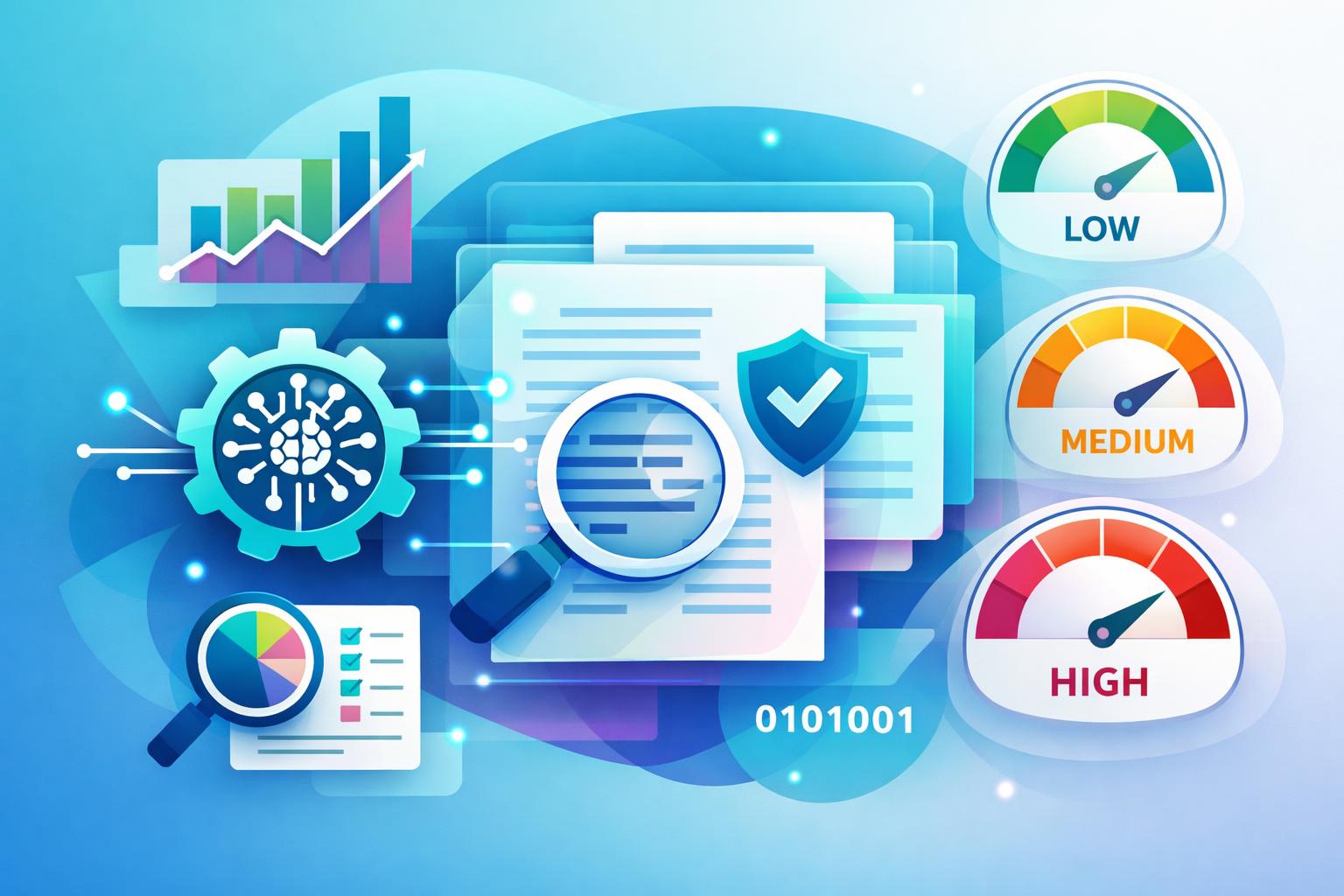
How to Build a Contract Risk Scoring Model (With Weighted Criteria and AI Automation)
This guide explains how to build a practical contract risk scoring model that turns qualitative risks into measurable data. You’ll learn how to design weighted criteria, calculate total scores, and automate analysis using ClearContract’s AI Contract Review module. The model helps legal and procurement teams prioritize high-risk contracts, streamline reviews, and improve operational efficiency.
What You’ll Need
- Access to your contract files (PDF or Word)
- Basic knowledge of legal clauses and contract structure
- Stakeholder agreement across departments
- 1–2 weeks for model setup and testing
- Optional: an AI Contract Review module like ClearContract
Step 1: Classify the Contracts You Want to Score
Start by defining the context and ensuring consistent scoring among similar contracts. Group and label contracts by type, value, duration, and regulatory exposure.
- Group contracts by type (vendor, customer, SaaS, or services).
- Categorize by value: High (> $100K), Medium ($10K–$100K), or Low (< $10K).
- Note duration (short- vs. long-term).
- Identify regulatory exposure (GDPR, HIPAA, etc.).
💡 Pro Tip: Separate categories may require different weight distributions later.
Step 2: Identify Contract Risk Criteria
List the specific risk factors your organization wants to assess. Review representative contracts to establish consistent areas of evaluation.
- Financial risk: payment terms, hidden fees
- Performance risk: SLAs, KPIs, termination rights
- Liability risk: indemnities, liability caps, insurance
- Compliance risk: missing regulatory clauses
- Deviation risk: non-standard language or missing protections
- Counterparty risk: vendor reliability or disputes
Step 3: Assign Weights to Each Criterion
Assign weighted importance to each criterion so risk scores reflect organizational priorities accurately. Ensure weights add up to 100%.
- Distribute weights based on business impact and compliance sensitivity.
- Document the reasoning behind each assigned weight.
- Financial exposure: 30%
- Deviation from standards: 25%
- Business criticality: 20%
- Regulatory compliance: 15%
- Counterparty performance: 10%
Step 4: Define a Scoring Scale
Create a standardized numerical scale and define scoring meanings for each risk criterion to maintain reviewer consistency.
- Choose a simple scale (1–10 where 10 = highest risk).
- Define each score for every criterion to ensure clarity.
💡 Pro Tip: For deviation risk, 1–3 means minor wording changes, while 7–10 indicates missing core protections.
Step 5: Calculate the Total Risk Score
Combine the weighted criteria to produce a single composite risk score using spreadsheet formulas or AI Agents that run the math 24/7.
=SUMPRODUCT(B2:B6, C2:C6)Calculates the weighted total risk score based on individual scores and weights
=IF(D2>70,"High",IF(D2>40,"Medium","Low"))Defines risk categories based on total score thresholds
- High risk: > 70 – senior review required
- Medium risk: 40–70 – additional scrutiny
- Low risk: < 40 – fast-track approval
Step 6: Prioritize and Triage Contracts
Use total risk scores to drive review decisions. Allocate resources where they are most needed and document mitigation actions.
- Send high-risk contracts to senior legal reviewers.
- Assign medium-risk contracts targeted reviews.
- Fast-track low-risk contracts using templates and playbooks.
- Maintain a risk register to track actions and outcomes.
Step 7: Automate Risk Scoring With AI
Use ClearContract’s AI Contract Review and AI Agents to detect clauses, apply your weighted model, and monitor risk continuously — AI does the work, not just talks about it.
- Upload contracts for automated clause extraction.
- Detect deviations from standard clauses.
- Apply your weighted risk model automatically.
- Identify risky clause combinations and generate Reports & Analytics dashboards.
Step 8: Monitor and Recalculate Risk Over Time
Regularly reassess contract risks as terms, regulations, or counterparty conditions evolve. Update weights and thresholds to stay accurate.
- Recalculate after renewals, amendments, or legal changes.
- Perform quarterly or annual reviews.
- Adjust weights based on historical disputes or outcomes.
Common Issues & Solutions
- Issue: Scores feel subjective → Solution: Refine definitions and retrain reviewers.
- Issue: Too many high-risk contracts → Solution: Adjust thresholds or rebalance weights.
- Issue: Outdated model → Solution: Update weights quarterly and stay compliant with new laws.
- Issue: Poor data quality → Solution: Standardize templates and clean legacy data before scoring.
Key Takeaways
- Define clear risk criteria before assigning weights.
- Use a consistent scoring scale and document definitions.
- Automate calculations to ensure precision and scalability.
- Apply ClearContract’s AI Contract Review to accelerate reviews.
- Continuously monitor and improve model accuracy over time.
Ready to put your scoring model on autopilot? Start a free ClearContract trial and let the AI Contract Review module score your portfolio.