Predictive Analytics Contracts for Smarter Risk Forecasting
 Jørgen Højlund Wibe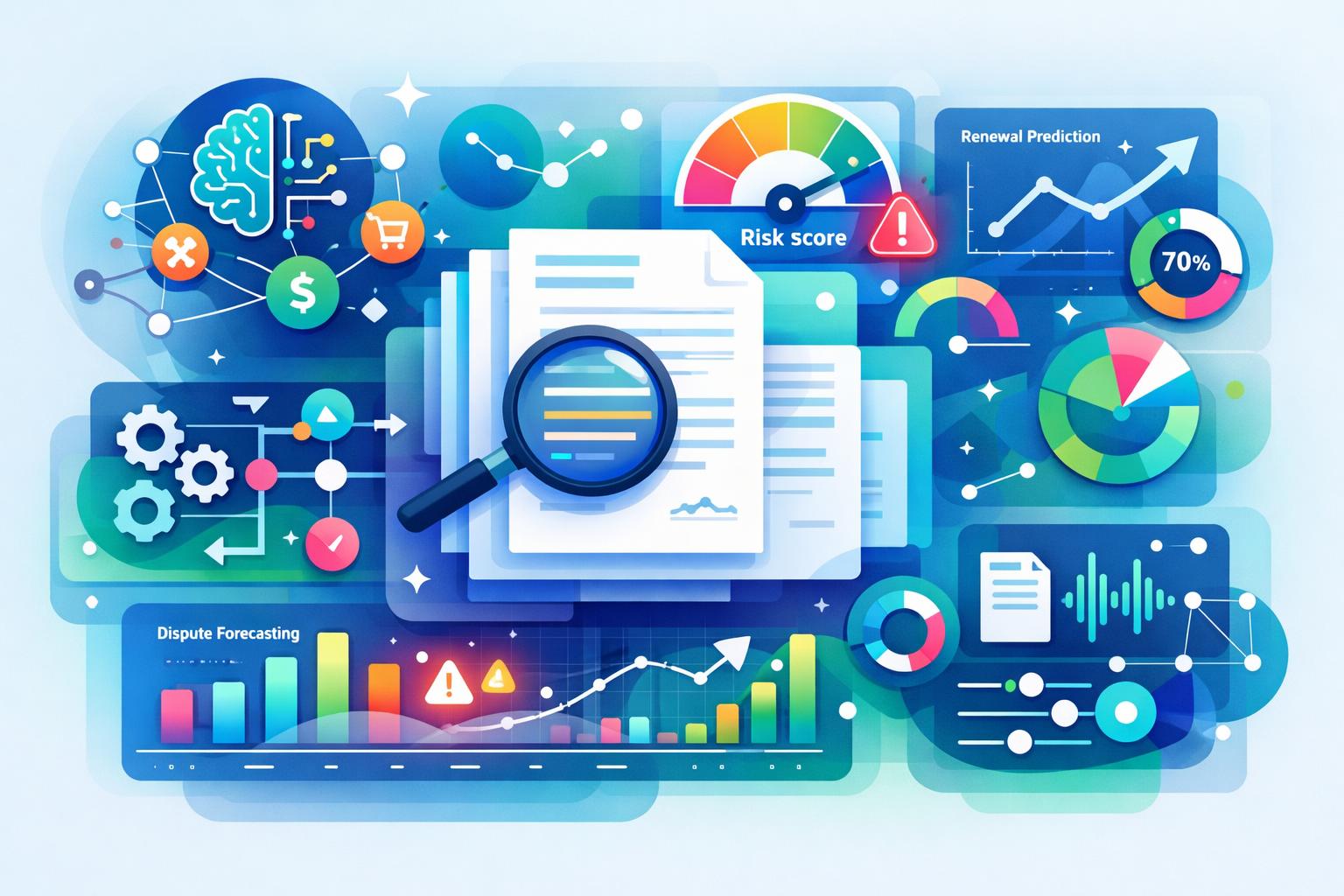
Missed renewals, late deliveries, and surprise disputes rarely come out of nowhere—they’re usually preceded by signals hidden in your contract history. Predictive analytics contracts turn those signals into early warnings, moving contract management from reactive administration to forward-looking decision-making. In this post, you’ll learn how AI and historical contract data forecast outcomes such as renewal likelihood, dispute probability, and negotiation timelines, plus how natural language processing (NLP) connects clause language to real-world results. You’ll also see where this is heading next, including real-time risk scoring and prescriptive recommendations that help your teams decide what to do—not just what might happen.
How Predictive Analytics Is Changing Contract Management
Contract portfolios generate operational and legal data at scale, including clause changes, approval delays, negotiation outcomes, renewal decisions, and disputes. AI models can analyze those trails to uncover patterns you can act on earlier, so you’re not learning about risk only after a missed renewal or a delivery failure triggers a scramble. The practical result is fewer surprises, faster reviews, and more consistent prioritization across legal, procurement, sales, and finance.
What’s changed is that AI now goes beyond reminders and metadata extraction. It can estimate renewal likelihood, flag agreements with elevated compliance risk, and predict which negotiation terms tend to create friction. Additionally, as machine learning and NLP improve, predictive contract analytics is becoming a core component of enterprise risk management and commercial strategy—especially for organizations managing high contract volumes.
“Predictive analytics doesn’t replace judgment—it gives your teams earlier, evidence-based signals so decisions happen before problems escalate.”
How Predictive Analytics Contracts Work in Practice
Predictive analytics uses historical and real-time data to estimate the probability of future outcomes, including renewal chances, dispute likelihood, supplier performance issues, and negotiation timelines. It typically starts with data aggregation across contract repositories, CRM, procurement tools, ERP platforms, and compliance systems. AI models then look for relationships between contract language, commercial terms, operational performance, and what happened later.
NLP is a key accelerator because it allows the system to understand contract text itself, not just structured fields. That means software can analyze clauses, compare language variations, detect deviations from approved standards, and link those differences to historical results. Tools like ClearContract’s AI contract review solution help legal teams identify problematic language faster while creating structured data that supports broader predictive analysis over time.
Pro Tip: If you want more reliable forecasting, standardize templates and clause libraries early; consistent language reduces fragmented data and makes AI predictions easier to explain and trust.
One of the most mature use cases today is contract risk forecasting. Models score agreements using indicators such as unusual indemnities, aggressive payment terms, inconsistent obligations, weak termination protections, or historical counterparty performance. Importantly, these systems produce probability-based assessments rather than absolute answers, which matches how legal and commercial teams actually operate—within ranges of risk, not certainty.
The strongest systems also explain the “why” behind a score by highlighting contributing drivers such as jurisdiction, supplier history, clause combinations, delivery patterns, or prior disputes involving similar terms. This makes triage more actionable, because your team can prioritize review based on measurable indicators instead of inconsistent escalation habits. Additionally, compliance oversight becomes more proactive when monitoring connects obligations to operational activity and triggers alerts before drift becomes a breach.
Renewal forecasting brings immediate commercial value because many organizations still rely on simple reminders without insight into churn risk. Predictive models combine contract history with engagement signals, support trends, performance metrics, pricing behavior, and communication sentiment to estimate renewal probability months in advance. For example, an account with declining usage, repeated escalations, and heavy discounting can be flagged early so customer success and legal can intervene with a plan rather than reacting at the deadline.
Negotiation forecasting follows the same logic by analyzing historical redlines, concession patterns, approval timelines, and clause disputes to predict where a counterparty is likely to push back and how long the process may take. Over time, systems can suggest fallback positions that historically closed faster while maintaining acceptable risk exposure. When paired with ClearContract’s automated contract drafting features, standardized templates and clause reuse can both speed execution and improve data quality for future predictions.
The Future of Predictive Analytics in Contract Management
The next phase is likely to move from static scoring to real-time contract intelligence. Instead of generating a risk score only during review, systems will continuously update predictions as new information arrives, including supplier downgrades, delayed milestones, compliance issues, or negative customer interactions. That dynamic scoring helps you respond faster because the contract’s risk profile changes with operational reality.
Additionally, predictions will increasingly connect to automated workflows. If a risk threshold crosses a defined level, escalation paths can trigger legal review, executive notifications, or revised approval requirements. Platforms that combine AI analysis with automation are well positioned here, including ClearContract’s contract workflow automation tools, which help operationalize insights rather than leaving them stuck in reports.
The biggest leap is moving from predicting outcomes to recommending the next best action inside your contract workflow.
A related shift is the move from predictive to prescriptive analytics, where the system recommends what to do next. That could mean suggesting alternative language that historically reduced disputes while preserving deal velocity, or recommending engagement strategies linked to higher retention outcomes. Generative AI will likely accelerate this by enabling teams to simulate scenarios, for example evaluating how adjusting indemnity language affects projected dispute exposure or how payment structure changes may influence renewal probability.
Portfolio-level forecasting will also become more central as leaders ask broader questions about clause-driven dispute costs, renewal performance by segment, and where legal review time creates bottlenecks. Advanced reporting tools turn those trends into decisions you can act on, and ClearContract’s contract reporting and dashboard features help visualize patterns across agreements and monitor upcoming risks more effectively.
However, stronger analytics still requires strong governance. AI is only as reliable as the data behind it, so fragmented repositories, inconsistent templates, poor metadata, and biased historical patterns can reduce accuracy. Human oversight remains essential because models can’t fully account for strategic relationships, market dynamics, reputational concerns, or unique negotiation contexts.
Key Takeaways
- Predictive analytics uses historical and operational data to forecast outcomes such as disputes, renewals, supplier performance issues, and negotiation timelines.
- AI and NLP connect clause language to real-world results, helping you spot hidden risk patterns across terms, counterparties, and performance history.
- Renewal and negotiation forecasting improves prioritization, so legal and commercial effort goes where it has the biggest impact.
- The next wave will emphasize real-time scoring, automated escalation, and prescriptive recommendations embedded into workflows.
- Reliable results still depend on data quality, governance, transparency, and human oversight.
If you want to get value quickly, start by centralizing contract data, standardizing templates, and connecting review, reporting, and workflow automation so predictions can drive action. Ready to see how AI-powered contract management supports smarter forecasting and decision-making? Book a demo with ClearContract or explore the platform’s contract automation capabilities in more detail.
Related Reading
Check out AI contract review solution for more on how structured review data can strengthen forecasting over time.